Abstract
We present long-term observations of the magnetic cataclysmic variables AM Her, AN UMa, AR UMa, DP Leo and V1309 Ori. Analyses of both short- and long-period light variations are presented. For the first time, as far as we know, long-period variations of AN UMa and AR UMa have been studied and multiple frequencies obtained. Fourier analysis indicates 170-, 218- and 180-d variations for AM Her, AN UMa and AR UMa, respectively. These periodicities may be due to modulation of the mass-transfer rate resulting from magnetic cycles in the secondary stars. In addition, we collect the physical parameters of polars from the literature and estimate their mass-transfer rates and orbital period variation and give a rough estimation of the donor magnetic fields.
1 INTRODUCTION
Magnetic cataclysmic variables (mCVs) have an important place in our concept of stellar evolution because of their strong magnetic field intensities and their unpredictable behaviour. Based on the magnetic field intensities of white dwarfs (WDs), magnetic cataclysmic variables are classified as intermediate polars (IPs) and polars (AM Her systems). Polars, consisting of a mass-accreting magnetic WD and a late-type active star, are short-period interacting binary systems. As far as we know, because of the high magnetic field intensities there are no accretion discs around the WDs in polars and components are synchronized. Optical radiation from a polar is mainly from the late-type star. On the other hand, in the energetic part of the electromagnetic spectrum the radiation is due to the WD. The spectra of polars are mainly characterized by cyclotron humps observed at infrared (IR) and optical wavelengths (Wickramasinghe et al. 1991; Cropper et al. 1989; Kalomeni, Pekunlu & Yakut 2005a, and references therein).
The high magnetic fields of WDs in polars are a characteristic feature, as well as a most important parameter that can define most of their observed features. What components create these systems with highly magnetic WDs? The answer to that question has been studied intensively by Tout et al. (2008), and evolutionary stages of polars were studied by Eggleton (1976), Whyte & Eggleton (1980), Paczynski (1981), Patterson (1984) and Howell, Nelson & Rappaport (2001b). The components of polars are usually late-type main-sequence stars. The rotation rate of a component is synchronized with the orbital period, which is less than a quarter of a day in most cases. Therefore, intense magnetic fields can be expected in donors of polars.
Light variations of polars are characterized by long-term variations in which the total brightness of a system can vary by ∼3 mag and by short-term small-amplitude variations. In the literature, especially during the last decade, long stretches of observations of polars that extend over years have been intensively studied (e.g. Hessman, Gänsicke & Mattei 2000; Kalomeni & Yakut 2008; Wu & Kiss 2008; Kafka & Hoard 2009; Sanad 2010). Studies on long-term variations are especially important to reveal any characteristics based on stellar activity and/or mass transfer.
In DQ Her systems, the magnetic field is not as strong as in AM Her systems and this leads to formation of a disrupted accretion disc and asynchronous rotation (see Warner 1995 for details). In contrast to polars, no well-studied IP has been reported to enter into a low state. Low- and intermediate-mass accretion of IPs, however, has been studied in the literature (see Garnavich & Szkody 1988; Bonnet-Bidaud et al. 2001; Warner 2003). Garnavich & Szkody (1988) studied the long-term behaviour of three DQ Her type mCVs and two nova-like non-magnetic CVs to reveal the role of the magnetic field and disc in the mass transfer behaviour. The authors concluded that IPs can show low states, while there are also IPs that show an absence of low accretion rate. The absence of the low state in an IP makes it difficult to study the stellar characteristics of the donor star and the distance estimation that is important to physical models of CVs (see Bailey 1981; Beuermann 2000). Possibly due to the less intense magnetic field intensities of WDs in IPs, they have high mass accretion rates and tend not to show low states as polars. Hence, because of the insignificant influence of the WD on the secondary, IPs are not expected to show high and low states similar to AM Her systems (Wu & Kiss 2008).
In polars, unlike systems with discs, any modulation in mass accretion rate is generally attributed to the donor star (e.g. Warner 1988; Richman, Applegate & Patterson 1994). Applegate & Patterson (1987) discussed the possibility that, because of the change in the quadrupole moment, magnetic activity leads to orbital period variation. The quadrupole moment depends on the rotation rate of the outer regions. In the case of angular momentum variation due to the activity cycle, the rotational oblateness of a star varies regularly and via gravity this will lead to orbital period variations (Applegate 1992). This variation in turn modulates the mass-transfer rate on the magnetic activity time-scale. The luminosity variation time-scale is the same as that of the orbital period variation (Applegate 1992). Other mechanisms like angular momentum loss may cause secular period changes. Applegate & Patterson (1987) therefore suggested continued observations of times of minima in order to understand the evolution of CVs better. Warner (1988) discussed magnetic activity of the donor as a cause of the observed long-term variations. Kotze & Charles (2010) also discussed the possibility that stellar activity of the donor leads to orbital period variations, which in turn cause long-term mass-transfer variations. Bianchini (1992) found no relation between the lengths of stellar activity cycles and orbital periods of interacting semi-detached binaries like novae.
In this paper, we study the long-term light variations of the first detected polar AM Her, the next discovered polar AN UMa, the polar with highest magnetic field AR UMa, the first discovered eclipsing polar DP Leo and the longest-period polar V1309 Ori. In Sections 2 and 3 we present the data and our observation and reduction techniques. In Section 4 we present the analysis. In the last section we discuss the results. Time-dependent variation of polars can be important to understand their physical and geometric properties and to impose constraints on the behaviour and evolution of a system.
2 OBSERVATIONS AND DATA REDUCTION
Polars are relatively faint systems. The brightest one among them is AM Her with a brightness variation range of 11.5–15 mag. Automatic telescopes are particularly useful to observe systems like polars that show unpredictable variations over the years. To study the long-term light variations of selected polars, therefore, we mostly used the Robotic Optical Transient Search Experiment (ROTSE) IIId telescope at the Scientific and Technological Research Council of Turkey (TÜBİTAK) National Observatory (TUG), and to study small-amplitude variations we observed AM Her (Kalomeni, Pekunlu & Yakut 2005b; Kalomeni & Yakut 2008) and V1309 Ori with the TUG RTT150 telescope.
We have conducted long-term observations of AM Her, AN UMa, AR UMa, DP Leo and V1309 Ori between 2005 and 2011 (Table 1). ROTSE IIId is equipped with a 2048 × 2048 pixel detector with a field of view 1°.85 × 1°.85. For further details of the ROTSE telescopes we refer the reader to Akerlof et al. (2003).
Coordinates, spectral types of secondaries, minimum times, orbital periods and magnitude ranges of the variable stars studied in this work are shown, with the number of exposures obtained with the ROTSE IIId telescope. References: AM Her –Kalomeni & Yakut (2008); AN UMa –Bonnet-Bidaud et al. (1996); AR UMa –Howell, Gelino & Harrison (2001a); DP Leo –Robinson & Córdova (1994), Beuermann et al. (2011); V1309 Ori –Shafter et al. (1995), Staude et al. (2001).
| Star name | Alias (RX) | α2000 | δ2000 | Sp.T. | T0 | Period (days) | Δm (mag) | Nobs |
| AM Her | J1816.2+4952 | 18 16 13.25 | +49 52 04.9 | M4.5 | 24443014.7136 | 0.12892704 | 11.5–15 | 3384 |
| AN UMa | J1104.4+4503 | 11 04 25.69 | +45 03 13.9 | 2443191.0204 | 0.07975274 | 15.2–17.3 | 485 | |
| AR UMa | J1115.6+4258 | 11 15 44.60 | +42 58 22.6 | M4 | 2450470.4309 | 0.08050075 | 14.2–16.5 | 678 |
| DP Leo | J1117.2+1757 | 11 17 16.00 | +17 57 41.1 | M6 | 2454914.8322 | 0.06236285 | – | 53 |
| V1309 Ori | J0515.6+0104 | 05 15 41.41 | +01 04 40.5 | M0/M1 | 2450339.4363 | 0.33261194 | – | 257 |
During ROTSE data reduction we used reduced frames. For the extracted magnitudes of stars we used a php script developed by V. Keskin that follows the data-reduction steps of Akerlof et al. (2003). We have reduced separately all the frames obtained with the RTT150 telescopes. The reduction of the CCD frames has been performed using the iraf (digiphot/apphot) packages. We observed the selected polars over almost 6 yr (544 nights, most of which are successive). The light curves of systems are shown in Fig. 1 and Figs 3–6 and the 33-yr American Association of Variable Star Observers (AAVSO) data of AM Her are shown in Fig. 2. Observations for AM Her between 2005 and 2008 have been studied in Kalomeni & Yakut (2008).
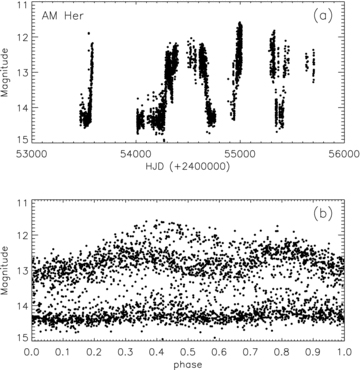
(a) Long-term light variation of AM Her obtained between 2005 and 2011 in HJD. (b) The same as (a) but in the phase domain. During the high state, the amplitude of light variation is higher than in the low state as well as showing two different patterns, one with a single maximum and one with two maxima.

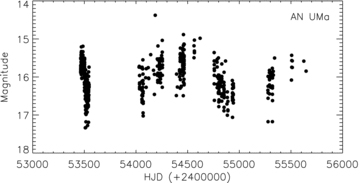
Long-term light variation of AN UMa.

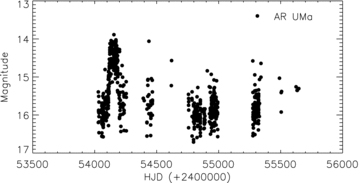
Long-term light variation of AR UMa.

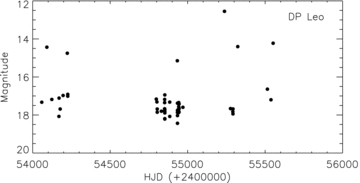
Long-term light variation of DP Leo.

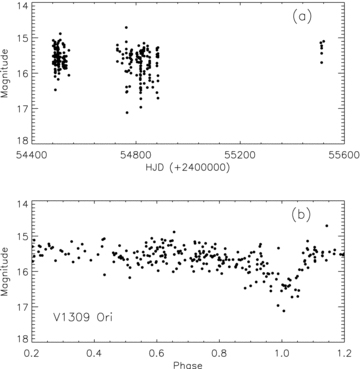
(a) Long-term light variation of V1309 Ori and (b) its light variation in the phase diagram.

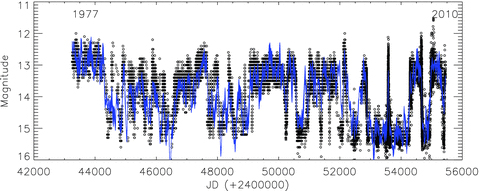
AVSAO data used in the frequency analysis for 33 yr of AM Her.

3 SELECTED POLARS AND THEIR LIGHT VARIATION
3.1 AM Her
Tapia (1976) discovered AM Her as a system showing large and variable circular and linear polarization. The duration of low and high states is apparently not periodic. The unpredictable behaviour of the system is apparent in more than 5 yr of observation totalling 3384 data points, shown in Fig. 1(a) and (b). Each night, 8–10 data points are obtained with mean errors of ∼0.007 mag. Folding the data for successive nights, the light variation during one orbital period was obtained. During the transition from low-to-high state and high state, both double and single maxima are observed. The same behaviour is also apparent in Fig. 1(b), where the light curve of the system shows both single and double maxima during the high state. Even during the same state, AM Her’s light variation can show differences. In addition, we analysed 33-yr AAVSO data of AM Her. More than 90 frequencies were obtained during the analyses. Using these frequencies, the solid line shown in Fig. 2 is plotted. On the other hand, most of these frequencies are combination frequencies. These non-periodic variations are most probably related to the magnetic activity of the secondary star, its interaction with the highly magnetic WD and any variation in mass-transfer rate. Apart from the orbital period, some of the detected periods are 178, 1836, 830 and 1520 d.
3.2 AN UMa
Hearn & Marshall (1979), by using SAS3 data obtained in 1975, detected the AM Her like properties of the AN UMa system for the first time. The light variation of AN UMa obtained in this study is shown in Fig. 3. Although there are gaps, the data extending over 2000 d show almost sinusoidal variations. However, the system needs observations to see if this path continues. AAVSO data of the system covering almost 15 yr give ∼6 yr quasi-cyclic variations; however, more extensive data collection is required for a detailed analysis.
3.3 AR UMa
Wenzel (1993), by studying AR UMa’s light variations extending over 32 yr, concluded this system to be a cataclysmic variable. Remillard et al. (1994) identified AR UMa as a soft X-ray source in the Einstein survey and from ellipsoidal variations they identified its orbital period. In Fig. 4 we show the variation detected in AR UMa. Its brightness variation seems to be higher than AM Her and AN UMa. The errors in the data are ∼0.09 mag. Period analysis of more than 11 yr of data obtained from the AAVSO data base indicates multiple frequencies and suggests a ∼4 yr variation. Unlike AM Her, in the phase domain AR UMa does not display significant differences between low and high states.
3.4 DP Leo
DP Leo (E1114+182) was the first eclipsing polar to be discovered (Biermann et al. 1985). This binary system is one of the interesting and important polars, since it is a member of the post-common-envelope binary group with known/suspected planet companions (Beuermann et al. 2011, and references therein). Because of the faintness of the system and even though it was given long exposure time, we could not gather accurate long-term light variation (Fig. 5); the errors are ∼0.2 mag. AAVSO data of the system also do not provide us with the opportunity to study it.
3.5 V1309 Ori
V1309 Ori (RXJ0515.6+0105) was discovered as a soft X-ray source with ROSAT (Beuermann & Thomas 1993) and classified as a magnetic cataclysmic variable by Garnavich et al. (1994). V1309 Ori, with a ∼8 h orbital period, is the longest-period polar detected so far. It is an eclipsing binary, which makes it easier to determine the orbital parameters and the physical parameters. Staude, Schwope & Schwarz (2001) revised the parameters of V1309 Ori by using both photometric and spectroscopic studies. The light variation of V1309 Ori obtained in this study is shown in Fig. 6(a) and (b). The ephemeris given by Staude et al. (2001) is used in Fig. 6(b). As well as using ROTSE IIId, we also observed the system during two nights in 2006 with RTT150 at TUG using the Cousins R band. However, we could not obtain the full light curve. Period analysis of these light variations indicates non-periodic light variations with periods varying between ∼10 and ∼17 min.
Polars are known to show occasional high and low accretion states. An important difference between the light curves of AM Her (Fig. 1b) and V1309 Ori (Fig. 6b), however, is that AM Her shows variations around (i) 14.5 mag and (ii) 12.5 mag, one with single peak and one with double peaks; on the other hand, long-term data of V1309 Ori show a single pattern of light variation. Schwarz et al. (2005) reported V1309 Ori to show a permanently high accretion rate. The AAVSO data of the system are also insufficient to study it in detail.
4 TIME SERIES ANALYSIS
A frequency analysis was performed on all available data points of AM Her, AN UMa and AR UMa obtained with ROTSE IIId. DP Leo and V1309 Ori have limited data points, therefore we excluded them from the time series analysis. The analysis was performed using the software period04 (Lenz & Breger 2005) and SigSpec (Reegen 2007), which is based on classical Fourier analysis. We searched for significant peaks in the frequency interval from 0 d−1 to the Nyquist frequencies.
The analysis resulted in the detection of 8, 5 and 6 frequencies for AM Her, AR UMa and AN UMa, respectively. Table 2 lists the obtained frequency, amplitude and signal-to-noise ratio (S/N) values sorted by decreasing values of amplitude. Possible combinations are also specified. S/N were computed in the interval of 5 d−1. In Fig. 7, spectral windows, calculated frequencies and observational data are pictured for AM Her. Similarly, Figs 8 and 9 have been plotted using the frequencies obtained from the data analysis of AN UMa and AR UMa. Periodicities the source of which we believe to be the secondary star and/or its interaction with highly magnetic WDs in the system have been detected for all three polars. These periods are 170, 217 and 180 d, respectively. The variations that correspond to these periods are shown in phase diagrams (Figs 7–9).
Computed frequencies, amplitudes and phase shifts of the ROTSEIIId data solution.
| ID | Frequency (d−1) | Amplitude (mag) | Sig. |
| AM Her | |||
| f1 | 0.0059 | 0.343 | 158.74 |
| f2 | 2.0041 | 0.390 | 85.73 |
| f3 | 16.5154 | 0.119 | 61.75 |
| f4 | 0.0186 | 0.173 | 43.37 |
| f5 | 8.7594 | 0.092 | 28.03 |
| f6 | 6.0084 | 0.085 | 20.46 |
| f7=forb | 7.753 | 0.109 | 13.94 |
| f8 | 0.8761 | 0.034 | 12.55 |
| AR UMa | |||
| f1 | 0.0056 | 0.382 | 60.90 |
| f2 | 0.0103 | 0.181 | 9.06 |
| f3 | 3.0536 | 0.107 | 5.51 |
| f4 | 6.5465 | 0.096 | 4.91 |
| f5=forb | 12.4212 | 0.093 | 4.82 |
| AN UMa | |||
| f1 | 0.0092 | 0.400 | 35.80 |
| f2 | 0.0248 | 0.249 | 9.62 |
| f3 | 1.0603 | 0.150 | 6.61 |
| f4=forb | 12.5373 | 0.127 | 6.21 |
| f5 | 0.9771 | 0.151 | 5.56 |
| f6 | 2.0493 | 0.115 | 5.37 |
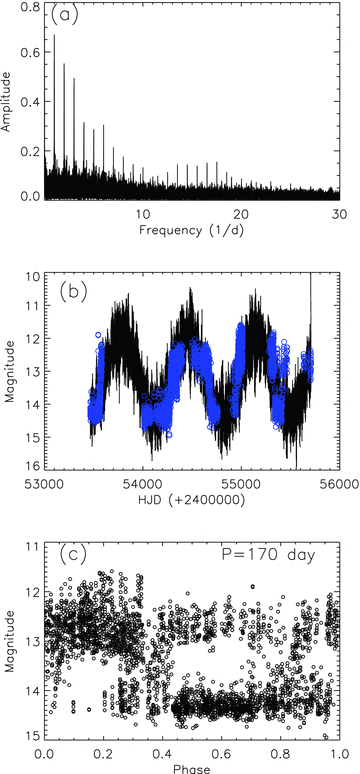
ROTSE data used in the frequency analysis for AM Her. (a) shows the spectral window of the data, (b) observation data and (c) the phase diagram for P= 170 d.

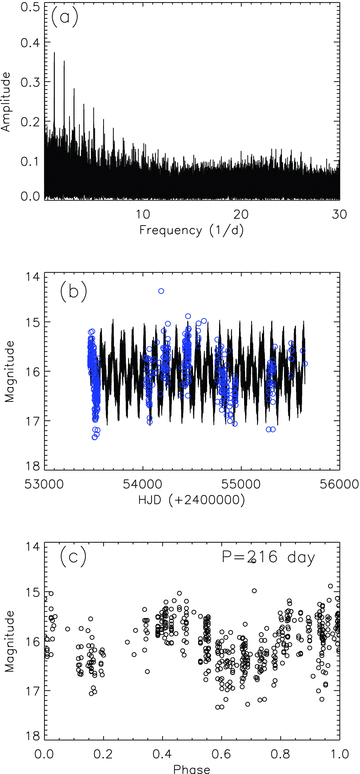
Same as Fig. 7 but for AN UMa.

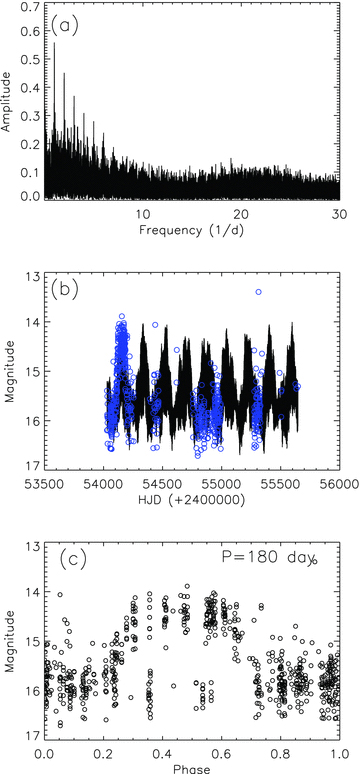
Same as Fig. 7 but for AR UMa.

5 DISCUSSION AND CONCLUSIONS
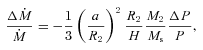
The polars studied in this work indicate that at short orbital periods the accretion rate is largest (see also Kotze & Charles 2010), while brightness variation is large. Recently, Kotze & Charles (2010) applied the relation given by Richman et al. (1994) to some low-mass X-ray binaries (LMXBs) and concluded that light variations in LMXBs originate from stellar activity cycles of the donor star.
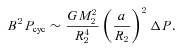

Orbital period, masses and magnetic field intensities of polars used in Fig. 10. See text for details.
Orbital period, masses and magnetic field intensities of polars used in Fig. 10. See text for details.
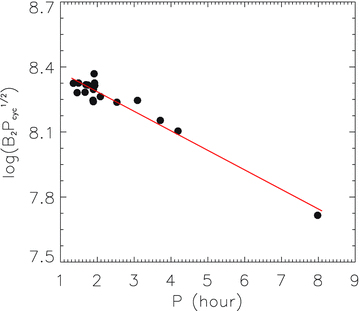
Estimated mean subsurface magnetic fields of secondaries in polars versus orbital period in hours. See text for details.

Because of stellar activity, the Sun and solar-like stars show modulations over decades with a quasi-periodic activity cycle. On the other hand, unlike single stars the dependence of stellar activity cycles on physical parameters in binary systems is not clearly defined. In this study, long-period variations obtained with the ROTSE IIId telescope indicate aperiodic 170-, 180- and 217-d variations for three polars. These variations can depend on the physical parameters of the secondary stars in polars and/or their interactions with the magnetic WDs or any other physical phenomena that we are as yet unaware of. Studying these variations will extend our knowledge of not only mCV evolution but also stellar activity and dynamos.
I am grateful to P. P. Eggleton, who has helped to improve the final version of the paper with his comments and suggestions. I am very grateful to an anonymous referee for constructive comments and suggestions that helped to improve the manuscript. I acknowledge deep gratitude to S. Rappaport, A. Levine and MIT Kavli Institute for Astrophysics and Space Research for the warm hospitality they extended during my visit. I acknowledge with thanks the variable star observations from the AAVSO International Database contributed by observers worldwide and used in this research. This research has made use of the SIMBAD database, operated at CDS, Strasbourg, France. I thank V. Keskin for his support in the ROTSE data processing and reduction. This work has been supported by TÜBİTAK (Project No. 109T047) and TÜBİTAK National Observatory (TUG).
REFERENCES