Abstract
Activation of baroreceptors in the carotid modulates the autonomic nervous system. Baroreflex activation therapy (BAT), which activates baroreceptors in the carotid, has become available in the treatment of resistant hypertension. Besides this, a carotid implant modulating baroreceptors as well as pharmacological modulation of carotid bodies were quite recently presented. This review will underscore currently available and promising approaches that activate baroreceptors in the carotid, and thereby contribute to beneficial effects in patients with arterial hypertension, and discusses potential organoprotective BAT effects beyond blood pressure (BP) reduction. A systematic review and meta-analysis was conducted including observational studies or randomized controlled trials that investigated the effect of BAT on BP in resistant hypertension. Nine studies, seven observational and two randomized, with a total of 444 patients, were included in the evaluation. Analysing the longest follow-up visit from the different studies, there was a significant reduction of systolic BP after BAT of −36 mmHg [95% confidence interval (CI) −42 to −30 mmHg]. Separate meta-analysis of the short-term (1–6 months) and long-term effects (≥12 months) revealed a reduction of –21 mmHg (95% CI −26 to −17 mmHg) and –38 mmHg (95% CI −46 to −30 mmHg), respectively. There are promising data both in the experimental and the clinical application for BAT. Though the present meta-analysis suggests beneficial effects of BAT on BP, the results must be interpreted extremely carefully. Considering that evidence from controlled trials is very limited, it is evident that there is a strong need for further investigation.
AUTONOMIC NERVOUS SYSTEM, BARORECEPTORS, CAROTID BODIES AND HYPERTENSION
The baroreceptors are strain-sensitive fibres located in the area of the aortic arch and both carotid sinuses near the carotid bifurcation. Their activation is triggered by pulse wave-mediated vessel stretching and their signal is passed via the glossopharyngeal nerve to the nucleus tractus solitarii in the dorsal medulla. Over a negative feedback cycle, sympathetic tone is reduced in the efferent part of the baroreflex and the parasympathetic tone is increased. Thus, an increase in the mean arterial blood pressure (BP) via the baroreflex leads to a vasodilatation with consecutive normalization of the BP and, thus, to a deactivation of the baroreceptors [1]. In the case of arterial hypertension (aHTN), the sensitivity of this control circuit can be adjusted to higher set points in the sense of a chronic adaptation. The exact underlying mechanism is still unknown. Damage of the receptors, genetically determined factors of the receptors, changes in the coupling between the receptor and the vessel wall, as well as a reduced extensibility of the vessel wall, in which the receptor is anchored, are proposed to contribute to a reduced baroreceptor sensitivity [1].
This leads to a reduction in the parasympathetic tone and to an increase in the sympathetic influences on the organism. The sympathetic dysfunction depends on a variety of reflexive and non-reflexive mechanisms and participates in the development and progress of aHTN. This applies to an increasing extent for the various stages of the aHTN, but also, above all, for the therapy-resistant hypertension (trHTN) [2]. TrHTN is defined as a non-guidelines-directed BP increase despite the corresponding use of three or more antihypertensives, including a diuretic. Tr-HTN has a considerable influence on morbidity and mortality. According to observations, ∼5–10% of all patients with aHTN are classified as ‘resistant to therapy’ [3]. Patient characteristics typically associated with a trHTN are secondary age, overweight, excessive salt consumption, chronic kidney disease (CKD), diabetes mellitus, left ventricular hypertrophy and black skin colour [4].
The chemosensitive carotid bodies are positioned near the baroreceptors at the carotid bifurcation to sample the composition of blood as it enters the brain. The activation of the carotid bodies by hypoxia drives excitation in medullary pre-sympathetic pathways, giving rise to a sympathetically mediated increase in BP, ultimately aimed at improving cerebral perfusion. A chronic partial occlusion of both carotid arteries results in a reduction in carotid body blood flow, an increase in resting renal sympathetic nerve activity and hypersensitivity of the chemoreflex-mediated sympathetic response to hypoxia. A prolonged challenge to the carotid body may drive a chronic increase in sympathetic outflow [5]. An upregulation of P2X3-receptor expression in the carotid body seems, in part, to be causal for the aetiology of the tonicity, hyperreflexia of chemoreceptive petrosal neurons and downstream hyperactivity of the sympathetic nervous system [6]. Recently published work has identified a possible role of the carotid body in other forms of neurogenic hypertension, such as renovascular hypertension and the hypertension induced by chronic intermittent hypoxia [5].
Figure 1 summarizes the physiology and pathophysiology of baroreceptors and carotid bodies in aHTN.
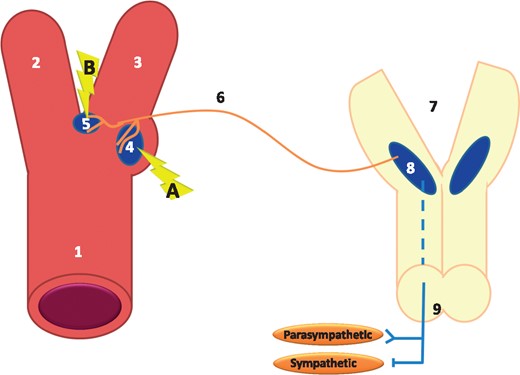
Physiology and pathophysiology of baroreceptors and carotid bodies in the aHTN. Legend: Arteria carotis communis (1), A. carotis externa (2), A. carotis interna (3), baroreceptor (4), carotid body (5), Nervus glossopharyngeus (6), fourth ventricle (7), nucleus tractus solitarii (8), inhibition of sympathetic and activation of parasympathetic nervous system (9). Genetic, environmental as well as disease-related disturbance of baroreceptor (A) or carotid body (B) lead to different influence on the parasympathetic and sympathetic activity. Whereas activation of the baroreceptors results in an enhanced parasympathetic and reduced sympathetic nervous activity (shown in the figure), activation of the chemoreceptos as well as reduced baroreceptor sensitivity promote opposing effects (data not shown).

CAROTID BODIES AS A TARGET FOR ANTIHYPERTENSIVE THERAPY
Animal and human studies have identified the carotid bodies as a putative target for antihypertensive therapy. In the preclinical model of spontaneously hypertensive rats as well as in human with hypertension, denervation of the carotid body was an effective way to control both the development and maintenance of high BP [7, 8]. In a very recent study, an upregulation of purinergic receptor P2X3 in chemoreceptive petrosal sensory neurons in rats with hypertension was identified as a possible pharmacologically treatable target. These neurons generated both tonic drive and hyperreflexia in hypertensive (but not normotensive) rats, and both phenomena were normalized by the blockade of P2X3 receptors. Antagonism of P2X3 receptors also reduced arterial BP and basal sympathetic activity and normalized carotid body hyperreflexia in conscious rats with hypertension, whereas no effect was observed in normotensive rats [6]. As there is evidence that P2X3 is expressed in human carotid bodies, antagonism of P2X3 might represent an attractive pharmacological treatment option in patients with uncontrolled aHTN and sympathetic overdrive [6].
BARORECEPTOR AS A TARGET OF ANTIHYPERTENSIVE THERAPY
MobiusHD® implant
Modulation of the baroreceptors by MobiusHD® is performed by a catheter-delivered implant of a nitinol self-expanding rectangular cuboid implant that is designed to increase carotid sinus arterial wall strain without impacting pulsatility or laminar flow. The geometric changes of the carotid sinus enhance baroreceptor sensitivity, thus decreasing sympathetic activity and lowering BP [9].
Data on the efficacy and safety of this procedure are very limited. The CALM (‘Controlling and Lowering Blood Pressure With The MobiusHD®’) clinical studies are evaluating the safety and efficacy of the MobiusHD® device in trHTN. The CALM-FIM (First-In-Man) is a prospective multicentre single-arm safety study enrolling 30 European and 10 US patients, and is to be presented at an upcoming medical conference. In an interim analysis of 15 patients, 3 patients had serious adverse events related to procedure or device: hypotension (n = 2) and closure device failure requiring repair (n = 1). During follow-up, eleven patients showed BP lowering more than 10/5 mmHg in office BP [9]. Moreover, the ongoing, single-arm CALM-DIEM study is investigating safety and efficacy in Europe, enrolling 200 patients. The CALM-II is planned as a multicentre, prospective, randomized, placebo- and sham-controlled pivotal study in Europe and the USA, enrolling 300 patients. The CALM-II trial is announced to be initiated in 2017. Data on the sympathetic and parasympathetic activity of this system are so far missing. Due to the very limited data available, the MobiusHD® procedure should actually, however, only be used within clinical trials and not yet in clinical practice.
Baroreflex activation therapy
With implanted electrodes for the stimulation of the baroreceptors in the area of the carotid sinus, the baroreflex can be stimulated independently of the body-specific regulation in such a way as to lower the sympathetic tone and to activate the parasympathetic [10, 11]. This external stimulation is reversible, leads to an immediate response and can be ‘dose-dependent’ [12]. Pulse width, intensity (amplitude) and frequency can be transcutaneously programmed. This results in a reduction of BP and heart rate (HR) [12]. There actually exist contradictory data on whether this system also activates the chemoreceptors positioned in the carotid sinus [13, 14]. This is currently under investigation (https://clinicaltrials.gov/ct2/show/NCT02587533). Two pacemaker-like electronic devices were developed with the intention of electronically stimulating the baroreceptor, and tested in clinical trials. The first-generation Rheos consists of surgically implanted electrodes leading to both carotids and a pacemaker unit implanted subcutaneously in the infraclavicular position. The second-generation system Baroreflex activation therapy (BAT) Neo uses a smaller, one-sided electrode with a significantly smaller aggregate. In clinical use only the second-generation system BAT Neo is currently available.
Indications for BAT
The indication for the application of BAT follows a priori the indication of other antihypertensive reserve procedures for trHTN. It is defined as uncontrolled BP >140/90 mmHg under the application of at least three correctly dosed antihypertensives, one of which should be a diuretic. According to the results of the Pathway-2 study [15], spironolactone should also be part of the medication, if compatible, prior to BAT evaluation, if this is individually possible. Most users are of the opinion that the systolic trigger BP value under therapy should be >160 mmHg. Considering the high number of non-adherent patients among patients with so-called apparent resistant hypertension, test for adherence should be performed within the scope of BAT indication [16]. In addition, the use of BAT in other indications is not very well documented. In previous BAT studies, the exclusion of secondary causes has been carefully standardized. Therefore, there is no evidence of the antihypertensive effects of BAT in patients with untreated secondary hypertension, such as primary hyperaldosteronism, obstructive sleep apnoea or renal artery stenosis. With regard to the therapeutic mechanism of barostimulation, however, it is conceivable that neurohumoural-mediated secondary hypertension forms, such as obstructive sleep apnoea, tend to respond to barostimulation rather than the purely humoural-mediated, such as the frequent primary hyperaldosteronism. Patients with stenosis of the carotid artery > 50% were excluded in the previous studies on BAT as it was for renal artery stenosis. For these indications, therefore, no recommendation can currently be given for use. Until more evidence is available the implementation of the BAT system should be restricted to hypertension centres experienced in the interventional part, as well as familiar with BAT technique, and their complications.
Otherwise, there exist three studies showing a BP-decreasing efficacy of the second-generation BAT Neo system in case of renoparenchymatous hypertension. In the study by Wallbach et al. in 23 patients with CKD [mean estimated glomerular filtration rate (eGFR) 64 ± 28 mL/min] the mean arterial BP after 6 months of BAT fell from 117 ± 21 mmHg to 104 ± 22 mmHg without changes in the control group (P < 0.01) [17]. Also, in seven patients with renal insufficiency requiring dialysis, a significant reduction in the BP by the BAT Neo system could be achieved [18]. In a subgroup analysis of a further monocentric study, there was no difference in BP reduction by BAT in patients with or without renal insufficiency [19]. Moreover, in a multicentric evaluation, 28 patients who underwent renal denervation at least 5 months before and still suffered from uncontrolled BP, were subsequently treated with BAT Neo. The office systolic BP (SBP) decreased from 182 ± 28 to 163 ± 27 mmHg (P < 0.01) with a responder rate of 68% (office SBP reduction >10 mmHg) at Month 6, whereas the number of prescribed antihypertensive drug classes remained unchanged [20].
Meta-analysis of BAT effects on BP
Search strategy and inclusion criteria
A systematic search was performed using Medline and Cochrane Library with the search terms ‘baroreflex activation OR barostim* OR baroreceptor stimulation OR baroreceptor activation OR carotid stimulation OR baroreceptor-activat*’ between 2005 and February 2017. Reports were screened independently for relevance based on title and abstract content by two authors (M.W. and M.J.K.). Randomized-controlled trials and prospective cohort studies as well as retrospective studies and case series were included if sufficient information on BP effects of BAT in patients with resistant hypertension were provided. Case series with fewer than six patients and studies including patients who were already part of previous trials were excluded. BAT trials analysing only acute experimental effects (<4 weeks) were not eligible for analysis of chronic effects of BAT. In order to minimize the risk of duplication of data, where sampling periods of two publications overlapped such that a patient could have been included in both, the study with the shorter follow-up period and reports including multiple studies were excluded.
Statistical analysis
Analysis was performed using RevMan V.5.3 (Nordic Cochrane Centre, Copenhagen, the Cochrane collaboration 2014). Data were quantitatively synthesized by an inverse-variance-weighted meta-analysis using a random-effect model because of the presence of heterogeneity. Standard deviation for the study of Bakris et al. [21] was derived graphically from the publication.
Results
With the present search strategy and assessment of full texts, nine studies, seven observational and two randomized, with a total of 444 patients could be analyzed. Figure 2 shows a flow chart of study selection. The observational period ranged from 1 to 32 months. Analysing the longest follow-up visit [median 13.5 months (interquartile range 9–26)] from the different studies, there was a significant reduction of SBP after BAT of −36 mmHg [95% confidence interval (CI) (−42 to −30 mmHg) (Figure 3A). Meta-analysis of the short term (1–6 months) and long-term effects (≥12 months) of the studies separately, revealed a reduction of –21 mmHg (95% CI −26 to −17) and –38 mmHg (95% CI −46 to −30), respectively (Figure 3B and C). Data from randomized trials investigating the effect of BAT on BP are very limited. Analysis of the two available randomized blinded trials demonstrated a significant reduction of SBP after BAT for patients in the active therapy arm of −18 mmHg (95% CI −34 to −2) (Figure 3D). Table 1 shows the included studies summarizing study design and main results.
Effects of BAT on BP
| References | Year | System | n | Prospective | Randomized | Blinded | Controlled | Observation period (months) | BP-measurement | Main results | ||
|---|---|---|---|---|---|---|---|---|---|---|---|---|
| ABPM | AOBP | Office BP | ||||||||||
| [22] | 2010 | Rheos | 37 | x | x | 3, 12 and 24 | x | x | Phase II study on safety and efficacy: significant lowering of the office BP by −21 ± 4/−12 ± 2 mmHg after 3 months (n = 37), −30 ± 6/−20 ± 4 mmHg after 12 months (n = 26) and −33 ± 8/−22 ± 6 mmHg after 24 months (n = 17). Significant reduction in ABPM by −6 ± 3/−4 ± 2 mmHg after 3 months (n = 26), by −13±3/−8±2 mmHg after 12 months (n = 15) and −24 ± 8/−13 ± 5 mmHg after 24 months (n = 8). | |||
| [25] | 2011 | Rheos |
| x | x | x | x | 6 and 12 | x | Compared with post-implantation baseline, reduction of −16 ± 9 in the BAT on group and −9 ± 29 in the BAT off group; P = 0.08. | ||
| Post hoc analysis: compared with pre-implant significantly decreased SBP in the treated cohort compared with the sham group after 6 months (−26 ± 30 mmHg versus −17 ± 29 mmHg; P = 0.03). After 6 months BAT activation in all patients and significant SBP in both groups after 12 months (−35 ± 28 mmHg versus −33 ± 30 mmHg). | ||||||||||||
| [21] | 2012 | Rheos | 244 | x | x | 28 ± 9 | x | (Open label follow-up of Ref. [26]; Significant reduction of systolic BP by −33±3 mmHg. | ||||
| [23] | 2012 | Neo | 30 | x | x | 6 | x | Significant reduction of BP by −26 ± 4.4 mmHg systolic. | ||||
| [18] | 2015 | Neo | 6 | 12 | x | x | Significant lowering of the BP from 194 ± 28 to 137 ± 16 mmHg systolic in dialysis patients with reduction of the antihypertensive medications from median 5 to 3. | |||||
| [19] | 2015 | Neo | 17 | 15.1 ± 8.7 | x | Significant reduction of BP from 179 ± 25/98 ± 18 mmHg to 147 ± 29/84 ± 20 mmHg. | ||||||
| [20] | 2016 | Neo | 44 | x | 6 | x | Significant reduction of systolic ABP from 148 ± 17 mmHg to 140 ± 23 mmHg systolic and from 82 ± 13 mmHg to 77 ± 15 mmHg diastolic. | |||||
| [27] | 2016 | Neo | 28 | 6 and 12 | x | x | Significant reduction of SBP by −18 and −21 mmHg after 6 and 12 months and 24 h SBP by −14 mmHg after 12 months in patients with insufficient BP reduction after renal denervation. | |||||
| [24]a | 2017 | Neo | 15/12 | x | x | x | x | 1 | x | x | Significant increase in systolic ABPM as well as in the systolic AOBP measurement by each 10 mmHg after BAT off. | |
| [24]b | 2017 | Neo | 17 | x | 2.67 ± 1.13 | x | Significant reduction in systolic AOBP in long-term follow-up from 189 ± 29 to 138 ± 33 mmHg (reduction of −51 ± 13 mmHg. | |||||
| References | Year | System | n | Prospective | Randomized | Blinded | Controlled | Observation period (months) | BP-measurement | Main results | ||
|---|---|---|---|---|---|---|---|---|---|---|---|---|
| ABPM | AOBP | Office BP | ||||||||||
| [22] | 2010 | Rheos | 37 | x | x | 3, 12 and 24 | x | x | Phase II study on safety and efficacy: significant lowering of the office BP by −21 ± 4/−12 ± 2 mmHg after 3 months (n = 37), −30 ± 6/−20 ± 4 mmHg after 12 months (n = 26) and −33 ± 8/−22 ± 6 mmHg after 24 months (n = 17). Significant reduction in ABPM by −6 ± 3/−4 ± 2 mmHg after 3 months (n = 26), by −13±3/−8±2 mmHg after 12 months (n = 15) and −24 ± 8/−13 ± 5 mmHg after 24 months (n = 8). | |||
| [25] | 2011 | Rheos |
| x | x | x | x | 6 and 12 | x | Compared with post-implantation baseline, reduction of −16 ± 9 in the BAT on group and −9 ± 29 in the BAT off group; P = 0.08. | ||
| Post hoc analysis: compared with pre-implant significantly decreased SBP in the treated cohort compared with the sham group after 6 months (−26 ± 30 mmHg versus −17 ± 29 mmHg; P = 0.03). After 6 months BAT activation in all patients and significant SBP in both groups after 12 months (−35 ± 28 mmHg versus −33 ± 30 mmHg). | ||||||||||||
| [21] | 2012 | Rheos | 244 | x | x | 28 ± 9 | x | (Open label follow-up of Ref. [26]; Significant reduction of systolic BP by −33±3 mmHg. | ||||
| [23] | 2012 | Neo | 30 | x | x | 6 | x | Significant reduction of BP by −26 ± 4.4 mmHg systolic. | ||||
| [18] | 2015 | Neo | 6 | 12 | x | x | Significant lowering of the BP from 194 ± 28 to 137 ± 16 mmHg systolic in dialysis patients with reduction of the antihypertensive medications from median 5 to 3. | |||||
| [19] | 2015 | Neo | 17 | 15.1 ± 8.7 | x | Significant reduction of BP from 179 ± 25/98 ± 18 mmHg to 147 ± 29/84 ± 20 mmHg. | ||||||
| [20] | 2016 | Neo | 44 | x | 6 | x | Significant reduction of systolic ABP from 148 ± 17 mmHg to 140 ± 23 mmHg systolic and from 82 ± 13 mmHg to 77 ± 15 mmHg diastolic. | |||||
| [27] | 2016 | Neo | 28 | 6 and 12 | x | x | Significant reduction of SBP by −18 and −21 mmHg after 6 and 12 months and 24 h SBP by −14 mmHg after 12 months in patients with insufficient BP reduction after renal denervation. | |||||
| [24]a | 2017 | Neo | 15/12 | x | x | x | x | 1 | x | x | Significant increase in systolic ABPM as well as in the systolic AOBP measurement by each 10 mmHg after BAT off. | |
| [24]b | 2017 | Neo | 17 | x | 2.67 ± 1.13 | x | Significant reduction in systolic AOBP in long-term follow-up from 189 ± 29 to 138 ± 33 mmHg (reduction of −51 ± 13 mmHg. | |||||
AOBP and ABPM change comparing BAT on and off.
AOBP change compared to pre-BAT.
Effects of BAT on BP
| References | Year | System | n | Prospective | Randomized | Blinded | Controlled | Observation period (months) | BP-measurement | Main results | ||
|---|---|---|---|---|---|---|---|---|---|---|---|---|
| ABPM | AOBP | Office BP | ||||||||||
| [22] | 2010 | Rheos | 37 | x | x | 3, 12 and 24 | x | x | Phase II study on safety and efficacy: significant lowering of the office BP by −21 ± 4/−12 ± 2 mmHg after 3 months (n = 37), −30 ± 6/−20 ± 4 mmHg after 12 months (n = 26) and −33 ± 8/−22 ± 6 mmHg after 24 months (n = 17). Significant reduction in ABPM by −6 ± 3/−4 ± 2 mmHg after 3 months (n = 26), by −13±3/−8±2 mmHg after 12 months (n = 15) and −24 ± 8/−13 ± 5 mmHg after 24 months (n = 8). | |||
| [25] | 2011 | Rheos |
| x | x | x | x | 6 and 12 | x | Compared with post-implantation baseline, reduction of −16 ± 9 in the BAT on group and −9 ± 29 in the BAT off group; P = 0.08. | ||
| Post hoc analysis: compared with pre-implant significantly decreased SBP in the treated cohort compared with the sham group after 6 months (−26 ± 30 mmHg versus −17 ± 29 mmHg; P = 0.03). After 6 months BAT activation in all patients and significant SBP in both groups after 12 months (−35 ± 28 mmHg versus −33 ± 30 mmHg). | ||||||||||||
| [21] | 2012 | Rheos | 244 | x | x | 28 ± 9 | x | (Open label follow-up of Ref. [26]; Significant reduction of systolic BP by −33±3 mmHg. | ||||
| [23] | 2012 | Neo | 30 | x | x | 6 | x | Significant reduction of BP by −26 ± 4.4 mmHg systolic. | ||||
| [18] | 2015 | Neo | 6 | 12 | x | x | Significant lowering of the BP from 194 ± 28 to 137 ± 16 mmHg systolic in dialysis patients with reduction of the antihypertensive medications from median 5 to 3. | |||||
| [19] | 2015 | Neo | 17 | 15.1 ± 8.7 | x | Significant reduction of BP from 179 ± 25/98 ± 18 mmHg to 147 ± 29/84 ± 20 mmHg. | ||||||
| [20] | 2016 | Neo | 44 | x | 6 | x | Significant reduction of systolic ABP from 148 ± 17 mmHg to 140 ± 23 mmHg systolic and from 82 ± 13 mmHg to 77 ± 15 mmHg diastolic. | |||||
| [27] | 2016 | Neo | 28 | 6 and 12 | x | x | Significant reduction of SBP by −18 and −21 mmHg after 6 and 12 months and 24 h SBP by −14 mmHg after 12 months in patients with insufficient BP reduction after renal denervation. | |||||
| [24]a | 2017 | Neo | 15/12 | x | x | x | x | 1 | x | x | Significant increase in systolic ABPM as well as in the systolic AOBP measurement by each 10 mmHg after BAT off. | |
| [24]b | 2017 | Neo | 17 | x | 2.67 ± 1.13 | x | Significant reduction in systolic AOBP in long-term follow-up from 189 ± 29 to 138 ± 33 mmHg (reduction of −51 ± 13 mmHg. | |||||
| References | Year | System | n | Prospective | Randomized | Blinded | Controlled | Observation period (months) | BP-measurement | Main results | ||
|---|---|---|---|---|---|---|---|---|---|---|---|---|
| ABPM | AOBP | Office BP | ||||||||||
| [22] | 2010 | Rheos | 37 | x | x | 3, 12 and 24 | x | x | Phase II study on safety and efficacy: significant lowering of the office BP by −21 ± 4/−12 ± 2 mmHg after 3 months (n = 37), −30 ± 6/−20 ± 4 mmHg after 12 months (n = 26) and −33 ± 8/−22 ± 6 mmHg after 24 months (n = 17). Significant reduction in ABPM by −6 ± 3/−4 ± 2 mmHg after 3 months (n = 26), by −13±3/−8±2 mmHg after 12 months (n = 15) and −24 ± 8/−13 ± 5 mmHg after 24 months (n = 8). | |||
| [25] | 2011 | Rheos |
| x | x | x | x | 6 and 12 | x | Compared with post-implantation baseline, reduction of −16 ± 9 in the BAT on group and −9 ± 29 in the BAT off group; P = 0.08. | ||
| Post hoc analysis: compared with pre-implant significantly decreased SBP in the treated cohort compared with the sham group after 6 months (−26 ± 30 mmHg versus −17 ± 29 mmHg; P = 0.03). After 6 months BAT activation in all patients and significant SBP in both groups after 12 months (−35 ± 28 mmHg versus −33 ± 30 mmHg). | ||||||||||||
| [21] | 2012 | Rheos | 244 | x | x | 28 ± 9 | x | (Open label follow-up of Ref. [26]; Significant reduction of systolic BP by −33±3 mmHg. | ||||
| [23] | 2012 | Neo | 30 | x | x | 6 | x | Significant reduction of BP by −26 ± 4.4 mmHg systolic. | ||||
| [18] | 2015 | Neo | 6 | 12 | x | x | Significant lowering of the BP from 194 ± 28 to 137 ± 16 mmHg systolic in dialysis patients with reduction of the antihypertensive medications from median 5 to 3. | |||||
| [19] | 2015 | Neo | 17 | 15.1 ± 8.7 | x | Significant reduction of BP from 179 ± 25/98 ± 18 mmHg to 147 ± 29/84 ± 20 mmHg. | ||||||
| [20] | 2016 | Neo | 44 | x | 6 | x | Significant reduction of systolic ABP from 148 ± 17 mmHg to 140 ± 23 mmHg systolic and from 82 ± 13 mmHg to 77 ± 15 mmHg diastolic. | |||||
| [27] | 2016 | Neo | 28 | 6 and 12 | x | x | Significant reduction of SBP by −18 and −21 mmHg after 6 and 12 months and 24 h SBP by −14 mmHg after 12 months in patients with insufficient BP reduction after renal denervation. | |||||
| [24]a | 2017 | Neo | 15/12 | x | x | x | x | 1 | x | x | Significant increase in systolic ABPM as well as in the systolic AOBP measurement by each 10 mmHg after BAT off. | |
| [24]b | 2017 | Neo | 17 | x | 2.67 ± 1.13 | x | Significant reduction in systolic AOBP in long-term follow-up from 189 ± 29 to 138 ± 33 mmHg (reduction of −51 ± 13 mmHg. | |||||
AOBP and ABPM change comparing BAT on and off.
AOBP change compared to pre-BAT.
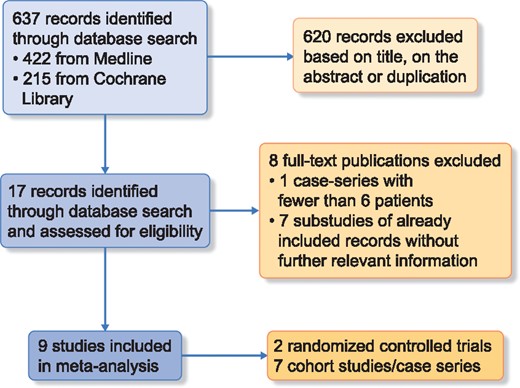
Flow chart of study selection.


Forest plot showing office SBP change in the active arm of BAT trials. Mean differences in SBP for BAT trials using devices to treat resistant hypertension. The change in SBP was given for the analysis time point compared with pre-implant values, except for Scheffers et al. [22] where SBP change was applied to post-implant values and for Beige et al. [18] cross-over where SBP change was based on the change between BAT on and off phase. (A) Meta-analysis including the data of patients with the longest follow-up available. Assessment of SBP change differed between 3 and 32 months. (B) Meta-analysis including the data of patients with a treatment period of 1–6 months after BAT initiation. If multiple follow-up visits were available for one study, the longest period within the analysed interval chosen was selected for analysis. (C) Meta-analysis including the data of patients with a treatment period of 12 months or longer after BAT initiation. (D) Meta-analysis including the data of patients from the active group from controlled blinded BAT trials. IV, inverse variance. To minimize the risk that individual patients appear in more than one publication, and are therefore analysed multiple times in meta-regression, only the longest follow-up available from one study (A), the time point 1–6 months (B) or 12 months or longer (C) were used for meta-analysis.

Organoprotective effects of BAT
Despite peripherally blocking presynaptic beta-adrenergic receptor blockers, other sympatholytic drugs like centrally acting agonists or peripheral compounds antagonizing alpha adrenoceptors did not influence relevant clinical endpoints [26, 28]. BAT, as another sympathoinhibitory BP-decreasing method, however, differs from each of the above mentioned individual drug classes. In a few and small observational studies additional, organ-related beneficial effects had been described. However, to date, it remains unclear whether these organoprotective effects are due to BP reduction alone, sympathoinhibitory effects or both.
Cardioprotective effects
Echocardiographic data from a subgroup of the DEBuT-HT study with the first generation device indicate a significant reduction in the diameter of the left atrium as well as in the septum thickness and left ventricular mass [25]. However, parameters of the diastolic function were not significantly altered. The first echocardiographic data of 31 patients treated with the second-generation Neo device were presented at the anniversary of the German Society of Cardiology 2015 and did not show a significant change in the left ventricular mass [29]. The diastolic function was significantly limited after 6 months but without any comparison to controls. In order to further evaluate a possible benefit of BAT in diastolic heart failure, a register study was initiated (ClinicalTrials.gov NCT02876042) in patients with trHTN and signs of diastolic heart failure (ejection fraction ≥50% and hospitalization due to cardiac insufficiency or echocardiographic signs of diastolic dysfunction or increase in NTproBNP).
An increased sympathetic tone plays an important role in the development and progression of systolic cardiac insufficiency [30]. The safety and efficacy of BAT in patients with systolic heart failure was investigated in a randomized, controlled trial in 146 patients [26, 28]. The intensity of BAT in cardiac insufficiency was titrated to avoid bradycardia and hypotension. On average, a significant increase in SBP was observed after 6 months by 8.5 ± 3.8 mmHg (P = 0.03) and the pulse pressure by 9.6 ± 3.2 mmHg (P = 0.004). Quality of life, NYHA class, 6-min walk and NTproBNP could also be significantly improved under BAT. A detailed presentation and assessment of the evidence for BAT in systolic cardiac insufficiency can be found in a previously published review [19].
Vasoprotective and metabolic effects of BAT
High central BP and increased pulse wave velocity (PWV) are independent risk factors of cardiovascular morbidity and mortality. Therefore, the European Hypertension Guidelines (ESH/ESC) defined a PWV of >9.6 m/s as an independent cardiovascular risk factor [31]. The central BP correlates with the extent of atherosclerosis, intima-media thickness or myocardial hypertrophy.
In one pilot study in 25 patients with trHTN the authors were able to show that the BAT decreased the mean central BP (aortal mean pressure from 109.7 ± 20.5 to 97.4 ± 18.9 mmHg; P < 0.01), the augmentation index at HR of 75 bpm (from 25.8 ± 8.8 to 22.3 ± 8.4%; P = 0.02) and the PWV (from 10.3 ± 2.6 to 8.6 ± 1.9 m/s; P < 0.01) after 6 months of therapy [17]. The fasting blood glucose values were also significantly improved by the BAT, but without any effects on the HbA1c value, quantitative Insulin Sensitivity Check Index (ISQuickI), Homeostasis model assessment–insulin resistance (HOMA-IR) as well as the Homeostasis model assessment–beta-cell function (HOMA-β) [32]. Moreover, there was no change in muscular glucose delivery and whole-body insulin sensitivity after acute baroreceptor stimulation [33].
Nephroprotective effects of BAT
In a follow-up study of the Rheos Pivotal trial, 236 patients with a SBP >135 mmHg in the ambulatory BP monitoring (ABPM) despite a 3-fold antihypertensive therapy (including a diuretic) were treated with a BAT. Patients with severe renal insufficiency (eGFR <30 mL/min) were excluded from the study. The mean eGFR at the beginning of the study was 92 ± 20 mL/min with a median albuminuria of 1.8 mg/mmol creatinine at a SBP value of 169 ± 27 mmHg. The SBP was significantly reduced to 151 ± 31 mmHg by the BAT. Proteinuria did not change, while the eGFR significantly decreased to 87 ± 22 mL/min. The drop in eGFR correlated with the drop in BP. In the group with an eGFR <60 mL/min, the eGFR remained stable over an observation period of up to 12 months. However, only 18 patients with eGFR <60 mL/min were included in the study, which had an eGFR of 49 ± 8 mL/min [10].
In a pilot study, we treated 23 CKD patients with trHTN with a BAT. At the start of treatment, these patients had a renal function with an eGFR of 64 ± 28 mL/min, an mean arterial BP of 116.9 ± 20.9 mmHg (systolic pressure 161.0 ± 31.9 mmHg, diastolic pressure 87.4 ± 15.2 mmHg) despite therapy with 6.6 ± 1.6 BP lowering medications. Proteinuria was initially a median of 283.9 mg/g creatinine with an albuminuria of 47.7 mg/g creatinine. Under the BAT, the BP decreased significantly to an average of 104.2 ± 22.2 mmHg (systolic value 144.0 ± 32.3 mmHg, diastolic value 77.7 ± 17.1 mmHg), although the number of BP-lowering drugs was reduced to 6.1 ± 1.7. Proteinuria and albuminuria were significantly reduced by a median of −29% and −19.0%, respectively, after 6 months of BAT. The decrease in albuminuria correlated with the drop in SBP. Patients who had a high-grade renal function at the start of therapy (CKD Stages 3 + 4) were more beneficial in lowering proteinuria than patients with a lower stage (CKD Stages 1 + 2). There was no change in median proteinuria [−76.7 (Q1: −336.1, Q3: +104.3) mg/g creatinine (P = 0.33) in patients with CKD Stages 1 + 2]. Patients with CKD Stages 3 + 4 had a significant median reduction of −178.8 (Q1: −346.5, Q3: −11.2) mg/g creatinine (P < 0.01). The eGFR remained stable in the BAT-treated patients despite the reduction of systemic BP over the time period, whereas a comparative collective that did not receive the therapy showed a significant drop in the eGFR over the same period.
Safety and side effects
Due to its invasive character BAT has some potential severe risks deriving from the implantation procedure, which implicates that this procedure should be performed only after strict patient selection.
Regarding the BAT safety profile, BAT Rheos and BAT Neo must be strictly separated because of significant differences in design and invasiveness that lead to an improved safety profile of the BAT Neo system compared with the Rheos system [23, 34]. In a recently published post hoc analysis comparing BAT Rheos and BAT Neo system, the rate of freedom from system- or procedure-related complications was 70% for the first-generation BAT system and 87% for the second-generation system [34]. Whereas transient and permanent nerve damage occurred in 9.6% of patients in the BAT Rheos trial [25], none occurred with the BAT Neo [34].
DISCUSSION
Efficacy of BAT in the treatment of aHTN
There are a number of studies investigating effects of BAT on BP. However, only two prospective, randomized, double-blinded studies exist so far.
The Rheos Pivotal study was a randomized, double-blind, placebo-controlled study that investigated the BP-lowering effect of the first-generation Rheos system in 265 patients with trHTN [25]. Four weeks after implantation of the BAT devices and electrodes, the patients were randomized into two groups, with one group receiving stimulation, and the other group no stimulation, for the first 6 months. The BAT devices were then activated in all patients. The study reached three of the five previously defined co-primary endpoints (sustained effectiveness after 12 months, BAT safety and device safety), the endpoints acute response and procedural safety were missed. However, in a post hoc analysis, after 6 months, a significantly higher SBP decrease was observed in the activated BAT group compared with controls (−26 mmHg versus −17 mmHg, P = 0.03) compared with the pre-implantation time.
The primary goal of the study was to achieve 20% more patients with a SBP drop of >10 mmHg in the activated BAT group compared with the control group was missed (54% versus 46%, P = 0.97). The authors hypothesized that the unexpectedly high BP drop in the control group immediately after implantation of the BAT led to the strong BP reduction in controls. This demonstrates that the use of pre-implant baseline measurements gave greater mean changes in SBP than post-implant measurements.
After 6 months, the BAT was also activated in the control group, and there was a strong BP reduction after 12 months in both groups: −35 ± 28 mmHg and −33 ± 30 mmHg, respectively.
The study by Beige et al. [24] investigated in a prospective, randomized, double-blinded on-off cross-over design the BP effects in 17 BAT patients treated with a BAT Neo system for 2.7 ± 1.1 years. A significant increase in systolic ABPM as well as in the systolic automated office BP (AOBP) measurement by 8 and 10 mmHg, respectively, were observed after 4 weeks of deactivation compared with BAT on [24]. This corresponds approximately to the difference between the sham and BAT group in the Rheos trial as well as the ABPM data of a prospective observation study on de novo BAT Neo-treated patients (n = 44) after 6 months of therapy (−8 mmHg) [20]. It is striking that the reported mean reductions in SBP were larger with office measurements than with 24-h ambulatory measurements. Thereby, office BP is more susceptible to the white-coat effect and regression to the mean. Ambulatory measurements are less influenced by placebo effects and regression to the mean, and are considered to be the most valid method to measure BP. Figure 3 summarizes the results on the BP and Table 2 summarizes the scope of ongoing trials.
Scope of ongoing BAT trials
| ClinicalTrials.gov identifier | Study design | Estimated study completion date | Expected sample size | Primary outcome measures | Status |
|---|---|---|---|---|---|
| NCT02880631 |
| July 2021 | 500 |
| Recruiting |
| NCT01471834 |
| August 2026 | 40 | Change from baseline in SBP at 6 months (time frame: 6 months) | Active, non-recruiting |
| NCT01679132 |
| September 2017 | 310 |
| Active, non-recruiting |
| NCT02364310 |
| November 2018 | 128 | 12-month diurnal SBP (mmHg) measured on ABPM, adjusted on baseline SBP, also used to compute the incremental cost-effective ratio (to identify the extra cost of unilateral carotid barostimulation in BP reduction compared with usual care) (time frame: 12 months) | Recruiting |
| NCT02572024 |
| November 2020 | 100 |
| Recruiting |
| ClinicalTrials.gov identifier | Study design | Estimated study completion date | Expected sample size | Primary outcome measures | Status |
|---|---|---|---|---|---|
| NCT02880631 |
| July 2021 | 500 |
| Recruiting |
| NCT01471834 |
| August 2026 | 40 | Change from baseline in SBP at 6 months (time frame: 6 months) | Active, non-recruiting |
| NCT01679132 |
| September 2017 | 310 |
| Active, non-recruiting |
| NCT02364310 |
| November 2018 | 128 | 12-month diurnal SBP (mmHg) measured on ABPM, adjusted on baseline SBP, also used to compute the incremental cost-effective ratio (to identify the extra cost of unilateral carotid barostimulation in BP reduction compared with usual care) (time frame: 12 months) | Recruiting |
| NCT02572024 |
| November 2020 | 100 |
| Recruiting |
Scope of ongoing BAT trials
| ClinicalTrials.gov identifier | Study design | Estimated study completion date | Expected sample size | Primary outcome measures | Status |
|---|---|---|---|---|---|
| NCT02880631 |
| July 2021 | 500 |
| Recruiting |
| NCT01471834 |
| August 2026 | 40 | Change from baseline in SBP at 6 months (time frame: 6 months) | Active, non-recruiting |
| NCT01679132 |
| September 2017 | 310 |
| Active, non-recruiting |
| NCT02364310 |
| November 2018 | 128 | 12-month diurnal SBP (mmHg) measured on ABPM, adjusted on baseline SBP, also used to compute the incremental cost-effective ratio (to identify the extra cost of unilateral carotid barostimulation in BP reduction compared with usual care) (time frame: 12 months) | Recruiting |
| NCT02572024 |
| November 2020 | 100 |
| Recruiting |
| ClinicalTrials.gov identifier | Study design | Estimated study completion date | Expected sample size | Primary outcome measures | Status |
|---|---|---|---|---|---|
| NCT02880631 |
| July 2021 | 500 |
| Recruiting |
| NCT01471834 |
| August 2026 | 40 | Change from baseline in SBP at 6 months (time frame: 6 months) | Active, non-recruiting |
| NCT01679132 |
| September 2017 | 310 |
| Active, non-recruiting |
| NCT02364310 |
| November 2018 | 128 | 12-month diurnal SBP (mmHg) measured on ABPM, adjusted on baseline SBP, also used to compute the incremental cost-effective ratio (to identify the extra cost of unilateral carotid barostimulation in BP reduction compared with usual care) (time frame: 12 months) | Recruiting |
| NCT02572024 |
| November 2020 | 100 |
| Recruiting |
A randomized trial is lacking for the BAT Neo system; a randomized controlled trial with a sufficient number of patients, which is the gold standard to evaluate effect of interventions, is absolutely needed.
Appropriate concepts for randomized controlled trials are still under controversial discussion. Ideally, such a study would require as an inclusion criterion, in addition to trHTN, a proven therapeutic adherence under an at least 4-fold antihypertensive therapy including an aldosterone antagonist. It should, beyond the evaluation of AOBP and ABPM change after 6 and 12 months compared with pre-implant values, include death of all cause, major cardiovascular events and/or incidence of dialysis as primary endpoints. A study including the latter ideal clinical endpoints, however, appears hardly feasible at present due to the current availability and the actual use of the BAT system worldwide.
From previous studies, BAT responder rates (reduction of systolic office BP of >10 mmHg) of 54–66% in office BP after 6 months were described [20, 25]. However, there are currently no predictors available indicating a therapy response (Table 3).
Point by point summary of the main conclusions
| Baroreceptors and chemoreceptors of the carotid are interesting targets for antihypertensive treatment. |
| Preclinical data identifying a pharmacological target in the physiology of chemoreceptors appears promising for the development of new antihypertensive medication [5]. |
| Baroreflex activation therapy is effective to reduce BP [24, 25] and might contribute to organoprotective effects. |
| Data for BAT are very limited, especially for the actual only available second-generation BAT Neo device. Randomized, controlled endpoint studies are needed to evaluate the impact of BAT on cardiovascular mortality, or at least, validated surrogates. |
| Baroreceptors and chemoreceptors of the carotid are interesting targets for antihypertensive treatment. |
| Preclinical data identifying a pharmacological target in the physiology of chemoreceptors appears promising for the development of new antihypertensive medication [5]. |
| Baroreflex activation therapy is effective to reduce BP [24, 25] and might contribute to organoprotective effects. |
| Data for BAT are very limited, especially for the actual only available second-generation BAT Neo device. Randomized, controlled endpoint studies are needed to evaluate the impact of BAT on cardiovascular mortality, or at least, validated surrogates. |
Point by point summary of the main conclusions
| Baroreceptors and chemoreceptors of the carotid are interesting targets for antihypertensive treatment. |
| Preclinical data identifying a pharmacological target in the physiology of chemoreceptors appears promising for the development of new antihypertensive medication [5]. |
| Baroreflex activation therapy is effective to reduce BP [24, 25] and might contribute to organoprotective effects. |
| Data for BAT are very limited, especially for the actual only available second-generation BAT Neo device. Randomized, controlled endpoint studies are needed to evaluate the impact of BAT on cardiovascular mortality, or at least, validated surrogates. |
| Baroreceptors and chemoreceptors of the carotid are interesting targets for antihypertensive treatment. |
| Preclinical data identifying a pharmacological target in the physiology of chemoreceptors appears promising for the development of new antihypertensive medication [5]. |
| Baroreflex activation therapy is effective to reduce BP [24, 25] and might contribute to organoprotective effects. |
| Data for BAT are very limited, especially for the actual only available second-generation BAT Neo device. Randomized, controlled endpoint studies are needed to evaluate the impact of BAT on cardiovascular mortality, or at least, validated surrogates. |
Both types of carotid receptors, carotid bodies and baroreceptor, are able to modulate the sympathetic nervous system and, by this way, arterial BP. In case of uncontrolled aHTN both receptors seems to change their configuration and activity. There have been several studies in animals and human targeting the modulation of these mechanisms. In the present meta-analysis BAT showed significant reduction of SBP both in short- and long-term follow-up. Though there are promising data in the clinical application for BAT, evidence from controlled trials are very limited and data need to be interpreted with caution. To finally assess the effects of BAT, there is need for a randomized controlled trial with well-defined endpoints since there is a significant number of patients suffering from resistant hypertension.
CONFLICT OF INTEREST STATEMENT
M.J.K. and M.W. received a research support from CVRx; M.J.K. is a consultant of the Barostim Neo Resistant Hypertension Registry and received CVRx lecture notes.