 https://orcid.org/0000-0003-0099-8440
Abstract
Chronic neck pain is challenging to treat in Veterans. Massage therapy benefit evidence for musculoskeletal pain is building and massage is now included in Veteran health benefits. This randomized control trial compared therapist-delivered massage (TT-M) versus waitlist control for Veterans with chronic neck pain.
TT-M involved twice-weekly massage therapist-delivered 60-min standardized sessions for 12-weeks. The Neck Disability Index and Brief Pain Inventory measured neck disability and pain severity at baseline, 1-, 3-, and 6-months. Linear mixed-model approach examined primary analysis at 3 months; responsiveness analysis examined clinically meaningful change, ≥5 point improvement in neck disability and ≥30% decrease in pain severity.
Participants (N = 290; n = 145/group) were aged 55.8 ± 14 years, 71% White, and 15% Female. Compared to control, TT-M participants had statistically significant reductions in pain-related disability at 1-month (−2.2; P = 0.007) and 3-months (−3.1; P < 0.001) and pain severity at 1-month (−0.8; P = 0.001), 3-months (−1.3; P < 0.001), and 6-months (−0.8; P = 0.003), respectively. TT-M participants were more likely to experience clinically meaningful benefits in neck disability at 3-months (35% v 16%; P=0.003) and pain severity at 1-month (27% v 14%; P=0.021), 3-months (43% v 15%; P<0.001), and 6-months (36% v 16%; P=0.005).
Therapist applied massage led to greater clinical benefits and reductions in neck disability and pain severity compared to waitlist control. Less robust outcomes at 6-months may suggest longer treatment windows or booster sessions are needed to maintain benefits. Engaging Veterans with massage therapy as part of their health benefits for chronic neck pain can provide an effective, non-pharmacological approach to pain management.
ClinicalTrials.gov Identifier—NCT03100539.
Introduction
Neck pain is a leading cause of disability and productivity loss worldwide,1,2 and is particularly challenging to treat.3,4 Neck pain’s potential to transition from an acute episode to a reoccurring, chronic condition is concerning and contributes to high chronic neck pain (CNP) prevalence and societal burden.5 U.S. Veterans have a high prevalence (up to 67%) of back and neck diagnoses6 and 65.5% reported pain in the previous 3 months, with 9.1% classified as having severe pain.7 In another VA study, the two most common cervical spine diagnoses were stenosis (50.0%) and disk herniation (23.2%).8 In Veterans with these diagnoses, neck pain was reported by 96.4%.8
Complementary and integrative treatments are primarily used by U.S. adults to address pain,9 and neck pain is second only to back pain as the most common condition for its use.10,11 Complementary and integrative medicine is especially popular in Veterans with 82% reporting use of at least one approach and 99% willing to try such approaches for pain.11 Veterans’ top complementary approach preference for pain is massage therapy.11,12 Veterans also report massage therapy increases mobility and flexibility, relaxation, and restful sleep while positively impacting depression, stress, anxiety, and fatigue.13,14 The literature reports massage therapy’s meaningful impact on musculoskeletal pain with back and neck pain having the most robust research.15–17 Multiple rigorous clinical trials examining CNP demonstrate massage therapy’s beneficial impact.17,18 Participants randomized to 10-weeks of massage therapy had greater clinically meaningful neck pain and disability improvement compared to a pain self-care book.19 Sherman and colleagues determined 60-min massage therapy sessions, 2 and 3 times per week increased the likelihood of clinically meaningful improvements for neck pain intensity and related disability compared to patients in a control arm.18,20
Reflective of interest and the growing evidence base, the U.S. Veterans Health Administration (VA) expanded its care benefits through VA Directive 113721 to include evidence-based complementary and integrative treatments, including massage therapy, as part of their commitment to a Whole Health System of care.22 While massage therapy use has increased substantially among U.S. Veterans since 2016 and the release of VA Directive 1137,23 a scarcity of literature examining massage therapy specifically in Veterans exists. This study seeks to address this literature gap by examining massage therapy for Veterans with chronic neck pain delivered in the healthcare, clinical environment.
Methods
Study design
The current study was initially designed to compare two massage approaches with waitlist control in Veterans with CNP (the Trial Outcomes for Massage: Care Ally-Assist vs Therapist Treated [TOMCATT] study). In 2019, due to technical limitations with the ally training and subject retention issues, the ally-assist massage group was discontinued. The data presented herein represents the results of the therapist-treated massage (TT-M) and waitlist control (WL-C) groups.24,25 TOMCATT was further impacted by the worldwide COVID-19 pandemic and related disruptions to medical care resulting in further design and planned analysis modifications. TOMCATT recruitment and data collection were complete in mid-2023. TOMCATT’s methodology has been reported previously in-depth, including detailed rationale for removing a study arm prior to COVID-19 disruptions.24 All participants provided informed consent, enrolled, and were randomized. TOMCATT was approved by the Indiana University Institutional Review Board and VA Research Review Committee and is registered with ClinicalTrials.gov (Identifier: NCT03100539). Data for all participants were primarily collected by study personnel via in-person interviews with study personnel although pencil and paper surveys were conducted through the mail upon participant request or via phone/Zoom interview after March 2020 due to COVID.
Eligibility
Veterans, ≥18-years, were eligible to participate if they had neck pain for 6 or more months with disability as indicated by a Neck Disability Index score of 10 or higher, had a VA care visit within the past 12-months, and did not have massage contraindications (eg, cervical radiculopathy, hypersensitivity to touch).
Recruitment
Approval to contact potentially eligible patients for study participation was obtained from primary care clinicians within the Roudebush VA Medical Center (Indianapolis, Indiana) and surrounding community-based outpatient clinics.24,25 Recruitment efforts included mailed letters to potentially eligible patients, study pamphlets and marketing within medical center clinics and through word-of-mouth. Veterans wanting to be contacted for eligibility assessment and possible enrollment returned an initial screening form through pre-paid post or on-site direct submission.
Randomization
Enrolled Veterans were randomly assigned using stratified block randomization lists (3 and 6 block sizes) created by the study statisticians. Randomization was stratified by gender (male/female) and occurred after consent, enrollment, and baseline data collection to minimize ascertainment bias.
Measures
Data collection occurred at four specific time points: Baseline, 1-month, 3-months, and 6-months; with the 3-month collection serving as the primary outcome point for analysis purposes. Neck pain disability and neck pain severity were the primary study outcomes and were measured with the Neck Disability Index (NDI)26,27 and Brief Pain Inventory (BPI),28,29 respectively. Secondary outcomes included quality of life, pain interference (also via BPI subscale28,29), emotional well-being, and pain cognitions.
Primary outcomes: neck disability and pain severity
All primary outcomes were measured at all four timepoints of the study. Neck pain disability was measured with the NDI, a 10-item assessment for pain and function domains (eg, walking, sitting, standing), with items framed as a “problem right now.”26,27 Items were scored on a progressive 6-point numeric rating (0-5, tool range 0-50) with higher item scores representing “worst” and total higher scores representing greater disability from CNP. The NDI has strong internal consistency (Cronbach’s alpha = 0.80) and construct validity.26 Scoring involves summing the score for each item (raw score) with specific scoring intervals to aid interpretation: 0-4 = no disability; 5-14 = mild; 15-24 = moderate; 25-34 = severe; and >34 = complete disability. At least a 5-point change is defined as “clinically meaningful”.20,26,30
Neck pain severity was measured with the pain severity subscale of the BPI, an 11-item validated, condition-adaptable 11-point numeric scales (0-10) assessment.28,29 The multidimensional BPI pain measurement tool has reliability in various pain populations and rates pain severity (4-items) and interference (7-items) within multiple contexts including mood, physical activity, and sleep.31 Changes in BPI scores and subscales of ≥ 30% are considered clinically meaningful.32
Secondary outcomes pain interference, functional health, depression, anxiety, and catastrophizing
Secondary outcomes were collected on various schedules with only pain interference via the 7-item, BPI subscale and health related quality of life measures via the Medical Outcomes Study-Veteran version (SF-36) tool33,34 collected at all study intervals. The valid and reliable Veteran version SF-36 measure provides two health composite scores for physical (PCS) and mental (MCS) health and role limitations with higher scores indicating more positive outcomes in each domain.34
Psychological symptoms were included as secondary measures due to their potential to moderate treatment effects. Depression and anxiety were assessed at baseline, 3-, and 6-months with the PHQ-9 and GAD-7, respectively. The PHQ-9 is a validated diagnostic measure with excellent psychometric properties (Cronbach’s alpha > 0.80)35,36 and the GAD-7 has demonstrated reliability (alpha = 0.89) and validity as a measure of anxiety.37 Pain coping was measured at baseline and 3-months with the Pain Catastrophizing Scale, a validated 13-item scale.38
Participant incentives
Participants received $25 per completed outcome assessment ($100 total) and invited to a massage self-care workshop at completion. Participants in the WL-C arm were also able to have a massage session with a study therapist after final data collection.
Intervention—therapist treated massage (TT-M)
The TT-M intervention protocol was based on prior research that used treatment intention and order reflective of typical massage treatments for pain as the standardization criterion.18,20 Swedish massage techniques such as effleurage, petrissage, and friction were used along with other techniques per therapist clinical decision making within massage therapy scope, and in which study massage therapists had additional training. Specific techniques prohibited by the protocol were movement re-education, shiatsu, deep pressure applied to the anterior neck, and energy work such as Reiki. All massage interventions were scheduled in advance and delivered in a private treatment room at the Roudebush VA Medical Center by one of eight study trained, licensed massage therapists with ≥3 years’ experience since becoming credentialed after their foundational training.
Massage sessions were scheduled in 90-min blocks, twice a week for 12-weeks, and involved an intake interview, assessment, 60-min of hands-on treatment, and closure with schedule confirmation. A timed PowerPoint slide show proctored each treatment session to ensure a full, 60-min of treatment and to support protocol fidelity between sessions and potentially multiple massage therapists. A detailed description of the standardized 9-component treatment sequence and protocol adherence and fidelity procedures is published in the TOMCATT protocol paper.24 Therapists completed handwritten treatment notes after each session and were advised not to instruct participants in self-care or self-massage recommendations.
Waitlist control care group (WL-C)
WL-C participants received check-in calls from study personnel at 2- and 4-months and completed outcome assessments on the same schedule as TT-M participants. Medical care was continued as normal, but participants were instructed to not begin a re-occurring massage routine during the 6-month study duration.
Statistical considerations
A post-study launch modification and pre-COVID disruption power analysis for TT-M vs WL-C determined N = 264 (n = 132 per group) would be needed for 80% power to detect a 0.4 standard deviation (SD) difference in change in NDI at 3-months from baseline between TT-M and WL-C. This calculation involved a Type I error = 0.05 and accounted for up to 24% total attrition.24 Sample size was derived based on an independent two-sample t-test which is conservative compared to the contrast from the planned linear mixed model analysis. The final approved project modification sought to enroll approximately 32 additional participants to account for participants considered lost to follow-up including those within the treatment window during the initial, > 1-year COVID “pause”. Due to time and budget constraints, the final 16 individuals enrolled were followed only through the primary 3-month endpoint. All analyses were conducted under the intention-to-treat principle, with all participant data used regardless of adherence to treatment or data collection protocol. All baseline demographic characteristics between the treatment groups were compared using the appropriate test (ie, t-test, Wilcoxon-rank sum test, Chi-square test, or Fisher’s exact test) to confirm randomization achieved balance between the groups. All analyses were conducted in SAS V9.4 (Cary, NC).
Neck pain disability-related analysis
The continuous NDI was analyzed with a constrained longitudinal data analysis (cLDA)39,40 model to compare the intervention effects between TT-M and WL-C on change in outcome at the primary 3-month endpoint after adjusting for the stratification variable of gender. The mean change difference from baseline to all timepoints are reported along with the associated 95% confidence intervals and P values. A responder analysis was also planned for neck pain disability (NDI) with “response” defined as a decrease of 5 or more points at the 3-month time point20,26,30 and for pain severity with a BPI pain severity “response” defined as 30% improvement from baseline.32 For these outcomes, logistic regression was used with Generalized Estimating Equation (GEE) methodology to account for correlation between repeated measures.41 The odds ratio and associated 95% confidence interval for clinically meaningful response of TT-M arm relative to WL-C arm overall and all other time points is reported.
Brief pain inventory-related and secondary analysis
Secondary continuous outcomes were analyzed with a similar constrained longitudinal data analysis (cLDA)39,40 model to compare intervention effects between TT-M and WL-C on outcome change at 3-months after adjusting for gender stratification. Mean change difference from baseline in secondary outcomes between groups at all timepoints are reported along with associated 95% confidence intervals and P values. A Šidák adjustment was used to maintain familywise type I error at 0.05 for multiple comparisons at a given time point. Within-group mean changes in continuous secondary outcomes are also reported with a Šidák adjustment.
COVID-19 disruption analysis adjustments—sensitivity analysis
Massage treatments were paused for over a year in the TT-M arm due to VA COVID-19 mandates with massage schedule completed and WL-C arm participants continuing assessments as usual. Sixteen TT-M participants had massages paused for 1.5 years in which assessments were not conducted. These participants were offered the opportunity to re-enroll in the study and be re-randomized if they met eligibility criteria since there was a 1.5-year washout period. All data collected for two participants who re-enrolled and were re-randomized was removed from the dataset. Non-reenrolled participants were considered lost to follow-up and all assessments up to point of discontinuation were included. During the final study months, patients were enrolled and intentionally (due to budget constraints) assessed through the primary 3-month endpoint.
Given the potential general health impact of COVID for the population and the 1.5 year pause in study activity, a conservative sensitivity analysis was performed. Sensitivity analyses were conducted to examine if COVID-19 may have impacted outcomes. For this analysis, the primary outcome model was re-ran excluding 14 participants with a baseline assessment that occurred prior to COVID-19 and 3-month follow-up assessments which occurred after.
Results
A total of 290 Veterans with CNP were recruited, randomized, and included in analysis for the 2-armed iteration of the current study. Figure 1 is the CONSORT flow diagram and demonstrates the extent to which randomization resulted in balanced participant numbers between study arms. Three TT-M randomized participants were removed from the flow diagram. One participant withdrew consent completely after beginning the intervention in early 2019. Two other participants were removed from the data set due to them restarting the study in 2021 after being re-randomized (1 each to the TT-M and WL-C arms) following the 1.5-year COVID shut-down. A total of n = 72 participants (24.8%) were lost to follow-up (LFU; n = 46 in TT-M and n = 26 in WL-C) at the 3-month, primary outcome timepoint. The month 6 timepoint had a 44.8% LFU which included n = 19 (6.6%) lost from the COVID-19 shut-down and n = 16 (5.5%) purposefully not collected after the month 3 data point due to an administrative modification to the study. Analysis of baseline characteristics for those LFU and retained in the study at 3 months revealed a small but statistically significant difference in age, but there were no differences in other demographic measures between those LFU and retained in the study (Table S1a-c).
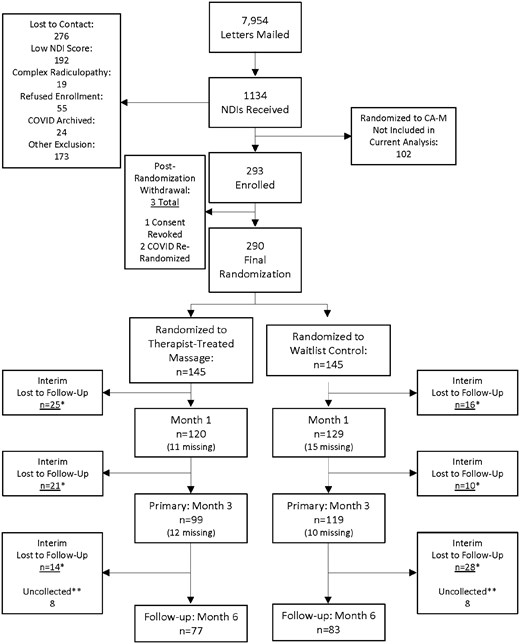
Study flow-diagram for therapist-treated massage (TT-M) vs waitlist control (WL-C). Notes: * Lost to Follow-Up (LFU) numbers include participants who ended their time with the study during the COVID-19 related shut-down (March 12, 2020–June 16, 2021). A total of n=13 and n=6 participants from the TT-M and WL-C arms, respectively, were LFU at 1-month (3, 2), 3-months (9, 1), and 6-months (1, 3). **Based on an administrative decision and protocol modification removing the 6-month assessment.

Sample characteristics and baseline results
Study participants (Table 1) were mostly men (85%) of average age 55.8 years (SD = 13.7), with approximately 71% White and 24% Black. Most participants were employed (46%) or retired (33%). Baseline neck disability and pain severity (Table 2) for the sample were high with participants on average scoring within the moderate disability range (20.3 ± 7.7 and 20.5 ± 8.5) on the NDI and > 6 out of 10 on the BPI pain severity subscale.
Baseline characteristics for N = 290 study participants.
| Overall N = 290 (100%) | TT-M n = 145 (50%) | WL-C n = 145 (50%) | P-value | |
|---|---|---|---|---|
| Mean age (SD) | 55.8 (13.7) | 55.6 (13.7) | 56.0 (13.7) | 0.810 |
| Education | 0.775 | |||
| ≤High School | 55 (20.0) | 28 (20.9) | 27 (19.2) | |
| Tech/Business/Associates | 123 (44.7) | 57 (42.5) | 66 (46.8) | |
| ≥Bachelors | 97 (35.3) | 49 (36.6) | 48 (34.0) | |
| Race | 0.516 | |||
| White | 197 (70.6) | 94 (68.6) | 103 (72.5) | |
| Black | 66 (23.7) | 33 (24.1) | 33 (23.2) | |
| Other | 16 (5.7) | 10 (7.3) | 6 (4.2) | |
| Hispanic¥ | 12 (4.6) | 8 (6.3) | 4 (3.1) | 0.221 |
| Female | 42 (14.5) | 20 (13.8) | 22 (15.2) | 0.739 |
| Marital status | ||||
| Married/partnered | 172 (62.6) | 84 (62.2) | 88 (62.9) | 0.913 |
| Non-partnered | 103 (37.5) | 51 (37.8) | 52 (37.1) | |
| Employment | ||||
| Employed | 128 (46.4) | 69 (50.7) | 59 (42.1) | 0.555 |
| Retired | 92 (33.3) | 42 (30.9) | 50 (35.7) | |
| Unable | 32 (11.6) | 14 (10.3) | 18 (12.9) | |
| Other | 24 (8.7) | 11 (8.1) | 13 (9.3) | |
| Income | 0.318 | |||
| Comfortable | 147 (52.7) | 77 (56.2) | 70 (49.3) | |
| Just enough | 101 (36.2) | 48 (35.0) | 53 (37.3) | |
| Not enough | 25 (9.0) | 11 (8.0) | 14 (9.9) | |
| DK/refused | 6 (2.2) | 1 (0.7) | 5 (3.5) | |
| PTSD Screener ≥2 | 112 (40.7) | 58 (43.0) | 54 (38.6) | 0.459 |
| Comorbidity sum (out of 14 items); median (range) | 3 (0, 8) | 3 (0, 8) | 3 (0, 8) | 0.767 |
Values are means (standard deviations) for continuous variables and frequencies (percentages) for categorical variables. P values are from Student’s t-tests, Wilcoxon rank-sum tests, and Chi-Square (using Fisher’s when ≥25% expected cell counts are <5, marked with a ¥) tests, respectively. Frequencies may not add to column totals due to missing data.
Primary analysis for primary outcomes at baseline and follow-up N = 290: within and between-group analyses analysis results.
| Neck Pain and Disability (Neck Disability Index, NDI) | ||||||||||
|---|---|---|---|---|---|---|---|---|---|---|
| Raw values at each time point | Longitudinal (cLDA) model results for N = 290 | |||||||||
| TT-M | WL-C | Change in TT-M (from baseline) n = 145 | Change in WL-C (from baseline) n = 145 | TT-M vs WL-C changes N = 290 | ||||||
| n | Mean (Std) | n | Mean (Std) | Mean (95% CI) | P-value | Mean (95% CI) | P-value | Mean (95% CI) | P-value | |
| Baseline | 145 | 20.3 (7.7) | 145 | 20.5 (8.5) | ||||||
| 1 month | 109 | 18.7 (8.4) | 114 | 21.1 (9.2) | −1.7 (−2.9, −0.5) | 0.004 | 0.5 (−0.7, 1.6) | 0.408 | −2.2 (−3.8, −0.6) | 0.007 |
| 3 months | 87 | 17.0 (8.6) | 107 | 21.2 (9.0) | −2.7 (−4.0, −1.4) | <0.001 | 0.4 (−0.7, 1.6) | 0.466 | −3.1 (−4.8, −1.4) | <0.001 |
| 6 months | 77 | 18.5 (8.3) | 83 | 21.6 (9.8) | −0.8 (−2.1, 0.5) | 0.237 | 0.9 (−0.4, 2.2) | 0.172 | −1.7 (−3.5, 0.1) | 0.065 |
| Pain Severity (Brief Pain Inventory, BPI Subscale) | ||||||||||
|---|---|---|---|---|---|---|---|---|---|---|
| Raw values at each time point | Longitudinal (cLDA) model results for N = 290 | |||||||||
| TT-M | WL-C | Change in TT-M (from baseline) n = 145 | Change in WL-C (from baseline) n = 145 | TT-M vs WL-C changes N = 290 | ||||||
| n | Mean (Std) | n | Mean (Std) | Mean (95% CI) | P-value | Mean (95% CI) | P-value | Mean (95% CI) | P-value | |
| Baseline | 145 | 6.1 (1.7) | 145 | 6.2 (1.8) | ||||||
| 1 month | 109 | 5.1 (1.9) | 114 | 6.0 (2.0) | −1.0 (−1.3, −0.7) | <0.001 | −0.2 (−0.5, 0.0) | 0.509 | −0.8 (−1.2, −0.4) | 0.001 |
| 3 months | 87 | 4.5 (2.0) | 109 | 6.0 (1.9) | −1.5 (−1.8, −1.2) | <0.001 | −0.2 (−0.5, 0.1) | 0.824 | −1.3 (−1.7, −0.9) | <0.001 |
| 6 months | 76 | 4.7 (2.2) | 82 | 5.7 (1.9) | −1.2 (−1.6, −0.9) | <0.001 | −0.4 (−0.7, −0.1) | 0.155 | −0.8 (−1.3, −0.4) | 0.003 |
Values are raw means (standard deviations) for non-change at each time point, with sample sizes for non-missing scores. Change values are adjusted means (95% confidence intervals) from cLDA models, adjusted for gender, utilizing all N = 290 participants.
Primary outcomes: neck pain with disability (NDI) and BPI pain severity
Analyses for the primary outcomes of NDI and BPI pain severity are displayed in Table 2. Significant changes occurred from baseline to follow-up in the NDI for the TT-M group at 1-month [mean change (95% confidence interval (CI)) = −1.7, 95% CI (−2.9, −0.5); P = 0.004] and 3-months [−2.7, 95% CI (−4.0, −1.4); P < 0.001]. No NDI changes were significant for the WL-C group. Differences between treatment groups for the NDI were significant at 1-month [−2.2, 95% CI (−3.8, −0.8); P = 0.007] and 3-months [−3.1, 95% CI (−4.8, −1.4); P < 0.001].
Significant Šidák adjusted associations for BPI pain severity indicated significant reductions from baseline in the TT-M group at 1-month [−1.0, 95% CI (−1.3, −0.7); P < 0.001], 3-months [−1.5, 95% CI (−1.8, −1.2); P < 0.001], and 6-months [−1.2, 95% CI (−1.6, −0.9); P < 0.0001]. Between-group differences were significant for pain severity at 1-month [−0.8, 95% CI (−1.2, −0.4); P = 0.001], 3-months [−1.3, 95% CI (−1.7, −0.9); P < 0.001], and 6-months [−0.8, 95% CI (−1.3, −0.4); P = 0.003].
Secondary outcomes: BPI pain interference, functional health, depression, anxiety, and catastrophizing results
Table 3 displays analyses for all secondary outcomes. Significant Šidák adjusted associations for BPI pain interference with the TT-M group show reduced pain interference at 1-month [−0.7, 95% CI (−1.1, −0.3); P = 0.001], 3-months [−1.0, 95% CI (−1.4, −0.6); P < 0.001], and 6-months [−0.9, 95% CI (−1.3, −0.4); P < 0.001] and for the between-group differences at 3-months [−0.8, 95% CI (−1.3, −0.3); P = 0.023]. For depression and anxiety, PHQ-9 and GAD-7 scores improved respectively within the TT-M group at 6-months [1.5, 95% CI (0.5, 2.4); P = 0.018] and [1.4, 95% CI (0.6, 2.3); P = 0.005]. No other secondary outcomes were significant.
Baseline, follow-up, and within and between-group change in brief pain inventory sub-scales and secondary outcomes.
| Pain Interference—Brief Pain Inventory, BPI Subscale | ||||||||||
|---|---|---|---|---|---|---|---|---|---|---|
| Raw values at each time point | Longitudinal (cLDA) model results for N = 290 | |||||||||
| TT-M | WL-C | Change in TT-M (from baseline) | Change in WL-C (from baseline) | Change in TT-M vs change in WL-C | ||||||
| n | Mean (Std) | n | Mean (Std) | Mean (95% CI) | P-value | Mean (95% CI) | P-value | Mean (95% CI) | P-value | |
| Baseline | 145 | 4.3 (2.4) | 145 | 4.6 (2.3) | ||||||
| 1 month | 109 | 3.7 (2.3) | 114 | 4.3 (2.6) | −0.7 (−1.1, −0.3) | 0.001 | −0.3 (−0.6, 0.1) | 0.686 | −0.4 (−0.9, 0.1) | 0.478 |
| 3 months | 87 | 3.1 (2.5) | 109 | 4.3 (2.7) | −1.0 (−1.4, −0.6) | <0.001 | −0.2 (−0.6, 0.1) | 0.752 | −0.8 (−1.3, −0.3) | 0.023 |
| 6 months | 77 | 3.3 (2.4) | 83 | 4.2 (2.6) | −0.9 (−1.3, −0.4) | <0.001 | −0.4 (−0.8, 0.0) | 0.306 | −0.5 (−1.0, 0.1) | 0.552 |
| Depression: PHQ-9 | ||||||||||
| Baseline | 145 | 7.7 (5.7) | 145 | 8.3 (6.3) | ||||||
| 3 months | 84 | 7.3 (5.3) | 107 | 8.7 (6.6) | 0.1 (−0.8, 1.0) | 0.999 | 0.7 (−0.1, 1.6) | 0.428 | −0.7 (−1.9, 0.5) | 0.897 |
| 6 months | 77 | 8.4 (6.2) | 83 | 9.3 (7.0) | 1.5 (0.5, 2.4) | 0.018 | 0.9 (−0.0, 1.8) | 0.343 | 0.6 (−0.7, 1.9) | 0.961 |
| Anxiety: GAD-7 | ||||||||||
| Baseline | 145 | 5.8 (5.1) | 145 | 6.0 (5.9) | ||||||
| 3 months | 86 | 5.7 (4.4) | 108 | 6.5 (6.3) | 0.5 (−0.3, 1.3) | 0.827 | 0.9 (0.1, 1.6) | 0.127 | −0.4 (−1.4, 0.7) | 0.992 |
| 6 months | 77 | 6.5 (5.7) | 83 | 6.9 (6.5) | 1.4 (0.6, 2.3) | 0.005 | 1.0 (0.2, 1.8) | 0.093 | 0.4 (−0.7, 1.6) | 0.984 |
| SF-36 Mental Component Score | ||||||||||
| Baseline | 144 | 45.7 (13.3) | 142 | 46.2 (14.2) | ||||||
| 1 month | 107 | 47.4 (13.4) | 108 | 46.7 (14.2) | 2.2 (0.3, 4.1) | 0.183 | 0.3 (−1.6, 2.2) | 0.999 | 1.8 (−0.8, 4.4) | 0.738 |
| 3 months | 87 | 47.9 (12.0) | 105 | 45.7 (14.4) | 1.5 (−0.6, 3.6) | 0.679 | −0.8 (−2.7, 1.2) | 0.984 | 2.3 (−0.5, 5.1) | 0.537 |
| 6 months | 77 | 45.8 (12.8) | 83 | 43.4 (15.8) | −0.9 (−3.1, 1.3) | 0.976 | −2.2 (−4.3, −0.1) | 0.265 | 1.3 (−1.7, 4.3) | 0.971 |
| SF-36 Physical Component Score | ||||||||||
| Baseline | 144 | 35.8 (7.1) | 142 | 35.3 (7.7) | ||||||
| 1 month | 107 | 36.0 (7.0) | 108 | 34.4 (7.4) | 0.3 (−0.9, 1.4) | 0.999 | −1.1 (−2.2, 0.0) | 0.337 | 1.4 (−0.2, 2.9) | 0.453 |
| 3 months | 87 | 35.4 (6.8) | 105 | 34.0 (6.5) | −0.4 (−1.6, 0.9) | 0.997 | −1.0 (−2.1, 0.2) | 0.504 | 0.6 (−1.0, 2.2) | 0.986 |
| 6 months | 77 | 35.9 (7.9) | 83 | 35.2 (7.0) | −0.3 (−1.6, 1.0) | 0.999 | −0.4 (−1.7, 0.8) | 0.992 | 0.1 (−1.6, 1.9) | 0.999 |
| Pain Catastrophizing | ||||||||||
| Baseline | 144 | 14.1 (13.2) | 145 | 15.1 (14.6) | ||||||
| 3 months | 84 | 12.6 (11.2) | 107 | 14.1 (14.9) | −0.4 (−2.6, 1.7) | 0.999 | −0.5 (−2.4, 1.4) | 0.998 | 0.1 (−2.7, 2.8) | 0.999 |
Values are raw means (standard deviations) for non-change at each time point, with sample sizes for non-missing scores. Change values are adjusted means (95% confidence intervals) from cLDA models, adjusted for gender, with Sidak adjusted P values utilizing all N = 290 participants.
Treatment responder analysis—clinically meaningful change
Figure 2 depicts the responder analysis for NDI and BPI Pain Severity at each time point between study arms (Table S2). The odds that participants in the TT-M arm experienced a clinically meaningful benefit in NDI was almost twice that of the WL-C arm [OR (95% CI) = 1.9 (1.1, 3.1); P = 0.014]. The odds for treatment response were even higher for the TT-M arm relative to WL-C arm at 3-months [OR (95% CI) = 2.8 (1.4, 5.5); P = 0.003] based on NDI (≥ 5-point decrease). The TT-M arm was also more likely to demonstrate a clinically meaningful response in BPI pain severity (>30% decrease from baseline) than the WL-C arm at all data collection points: 1-month [OR (95% CI) = 2.2 (1.1, 4.4); P = 0.021], 3-months [OR (95% CI) = 4.3 (2.2, 8.5); P < 0.001], 6-months [OR (95% CI) = 3.0 (1.4, 6.3); P = 0.005], and overall [OR (95% CI) = 3.1 (1.9, 4.9); P < 0.001].
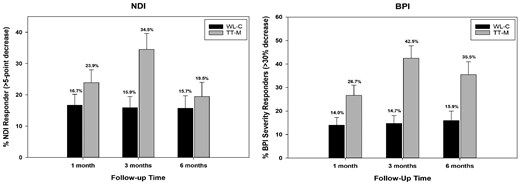
Proportions of clinically meaningful change for WL-C and TT-M participants in Neck Pain with Disability via the Neck Pain Disability Index (NDI) and Pain Severity via the Brief Pain Inventory subscale for pain severity (BPI) scores at 1-, 3-, and 6-months from baseline. Note: Study group proportions with standard error bars.

Sensitivity analysis
A sensitivity analysis was conducted for the NDI primary outcome measure to determine if results changed by removing data from the 16 participants affected by the COVID-19 shutdown. These participants had baseline assessments conducted prior to COVID-19 shutdown and 3- and 6-month assessments after the shutdown. Even with removing these participants, the results were similar although mean change at 3-months was slightly less pronounced (Table S3). Specifically, significant changes from baseline to follow-up for the TT-M group were observed at 1-month [mean change (CI 95%) = −1.6 (−2.8,−0.4); P = 0.008] and 3-months [mean change (CI 95%) = −2.9 (−4.2, −1.6); P < 0.001]; with no within group changes for WL-C. Between group differences at 1-month [mean change (CI 95%) = −1.8 (−3.5, −0.3); P = 0.023] and 3-months [mean change (CI 95%) = −2.8 (−4.6, −1.2); P = 0.001] was also better for TT-M group compared to WL-C, reflecting the same outcome patterns in the planned, main analysis.
Discussion
These study results are the first from a large randomized controlled trial to examine therapist applied massage therapy for Veterans with chronic neck pain (CNP) and to date, is the largest, single-site examination of massage therapy for musculoskeletal pain within the Veteran population. Massage therapy has been added to the health benefits package for Veterans since this study launched and these results are the only to date that examine massage therapy delivered to outpatient Veterans for any condition. This study revealed Veterans experienced significant and clinically meaningful improvement in neck disability and pain severity after receiving twice weekly therapist applied massage therapy. Improvements were seen as early as 1-month from baseline and were more pronounced after three months of treatment. While improvements to neck disability diminished three months after treatment was discontinued (6-months), neck pain severity improvements from baseline to post-intervention follow-up were significant for those who received massage compared to control.
Potential impact of booster sessions
Massage therapy’s sustained benefit for Veterans with CNP after three months adds strength to prior evidence examining massage for musculoskeletal pain generally15,16 and CNP specifically.18–20 While improvements in pain severity remained at follow-up, massage’s diminished impact on disability at 6-months suggests booster sessions may be needed to maximize massage’s therapeutic effects on function. Booster sessions can be and are incorporated into research protocols or treatment planning in different ways including after primary treatment delivery and data collection or by incorporating self-care approaches into the therapist-delivered intervention and data collection plan.
Cook and colleagues incorporated booster treatments after the primary intervention and data collection in their dosing study examining massage for CNP.20 Participants were randomized to either 6 or 0 additional weekly booster massage sessions after the main intervention window of four weeks.18 The booster sessions were beneficial at 12-weeks but not sustained at 26-weeks18 which may suggest a need for a continued maintenance massage approach for chronic musculoskeletal pain conditions. Field et al incorporated a self-care booster approach to maximize four, weekly 30-min therapist applied massage sessions to address pain and range of motion for adults with neck arthritis.42 Participants performed approximately 15-min of a standardized self-applied neck massage on the days between the weekly, therapist-applied massage. This booster approach resulted in significant benefits for pain and function42 contrasting other findings of multiple weekly 30-min treatments for neck pain but without the self-care booster sessions.20 These conflicting 30-min massage dose findings within a multiple treatment week series suggest an inter-intervention booster role to enhance achieving a therapeutic benefit threshold for massage applications addressing musculoskeletal pain.
This study’s protocol specifically directed study massage therapists to not give self-massage or related recommendations to participants for use between treatments or during follow-up. While this does not reflect standard massage practice for CNP, the intent was to reduce potential confounding and directly assess therapist-applied massage for Veterans with CNP. For example, Sherman20 was criticized for methodological problems including confounding by non-standardized therapist made self-care recommendations between treatments.42 The care-ally assisted massage routine developed for the study’s original design included self-massage techniques that could be used in a self-care booster approach.24,25
Clinically meaningful change
Neck pain with disability and pain severity were specifically selected as outcomes due to established thresholds for clinically meaningful change highlighted in prior massage therapy.18–20,43 Specifically, Sherman and colleagues18,20 used the NDI and 11-point pain intensity scale for their research, allowing critical proportion comparisons with the current study’s findings which provide interesting insight for evidence-based clinical treatment planning considerations. Sherman’s primary research treatment period was 4 weeks,20 mirroring the 1-month data collection point for this study, with Sherman’s follow-up at 12- and 26-weeks, mirroring the current study’s 3- and 6-month primary and follow-up points, respectively. Sherman also examined multiple dosing levels (30- and 60-min treatments once, twice, and three times/week) within the 4-week treatment intervention period and re-randomized participants after the primary treatment period to either receive 6, weekly 60-min booster sessions or not.18 Twenty-four percent of the current study’s participants achieved clinically meaningful benefit for neck disability (NDI) after 4 weeks of twice-weekly 60-min massage treatment compared to 32% in the DREAM study.20 However, the additional 2 months of twice-weekly massage increased the proportion of current study participants reaching clinically meaningful benefit at 12-weeks (35%). This represents a slightly higher proportion than the twice weekly 60-min massage in the DREAM study at their primary end point (4-weeks, 32%) but not nearly as much as the thrice weekly, 60-min dosage (47%). Similarly, 27% of the current study’s participants achieved ≥ 30% reduction in pain severity after 4 weeks of twice-weekly, 60-min massage treatment compared to 63% in the DREAM study.20 For pain severity, 43% met clinically meaningful change at 12-weeks (43%) which was higher in the DREAM study. This study’s results for strong clinical benefit for twice-weekly, 60-min massage sessions reinforce the DREAM study finding that 60-min massage sessions for chronic neck pain is superior to 30-min sessions, regardless of weekly frequency, particularly regarding neck pain disability. The Sherman et al DREAM study also conducted their analysis following the intention-to-treat principles and had fewer participants LFU than the current study (DREAM had 97% complete at least 1 follow-up data collection point beyond baseline18) but also more study arms and a > 120 smaller sample size. While the current study had greater LFU and fewer randomization arms than the DREAM study, the current study’s greater study sample overall and concentrations within fewer treatment arms strengthen the comparisons between the two.
Differences in those achieving clinically meaningful benefits between the current and DREAM studies are likely due to sample differences. Veteran participants in the current study had greater neck disability (20.3-20.5 vs 13.1-14.3 mean NDI scores) and pain severity/intensity (6.1-6.2 vs 5.6-6.1 mean 11-point range) at baseline compared to general adult participants in the DREAM study.18,20 Veterans’ more severe pain experience may require higher massage dosages and/or prolonged treatment periods compared to the general adult population for effective musculoskeletal pain management.
Secondary outcomes
No secondary measure benefits beyond pain interference reached statistical significance. While pain interference significantly decreased for TT-M participants at 3-months, there was no within or between group differences in mental health outcomes or quality of life measures at 3-months. Of concern, however, were the within group differences at 6-months exclusive in the TT-M arm, demonstrating a significant negative change in mean depression and anxiety scores from baseline, three months after treatments were discontinued. It is well established that those with chronic pain often experience adverse mental health and wellbeing,44–46 and evidence is growing regarding massage therapy benefit toward emotional well-being for those with cancer or other critical illnesses.47,48 We hypothesized that pain improvement would accompany improved mental health outcomes. However, only slight, non-statistically significant improvements were present in the TT-M group at 3-months for depression and anxiety (7.3 from 7.7 at baseline and 5.7 from 5.8, respectively) while those in the WL-C arm had worse mean PHQ-9 and GAD-7 scores at 3- and 6-months. The timing related to the treatment series application may be notable and highlight a need to have collected the depression and anxiety specific measures at 1-month to potentially assess positive mental health impact before concern or anxiety could set in related to concern of a discontinued, beneficial pain management approach. While these concerning findings may suggest a negative impact on Veterans’ wellbeing when twice-weekly massage is withdrawn, additional research is needed to understand the likely nuanced mental health impact of massage for those managing chronic, musculoskeletal pain, particularly regarding booster sessions, accompanying self-massage self-care strategies, or tapered treatment withdrawal approaches.
Limitations
This study had several limitations including the need to significantly modify its research design two years after launch due to retention challenges isolated to one of the intervention arms resulting in the current two-armed study.24 Additionally, the world-wide COVID pandemic disrupted study activities from March 12, 2020 through June 16, 2021, and again from December 13, 2021 through February 7, 2022. Much clinical research worldwide was similarly disrupted49 and several methodological adjustments were required when enrollment and study activities resumed; the impacts of which are challenging to quantify. For example, participants within the TT-M arm treatment window were at first temporarily paused in treatment delivery and data collection. Once the seriousness and extended COVID situation was understood, the temporary disruption became an indefinite “pause” for the study. Participants were LFU due to collection protocol adjustment needs that could not be meet within the approved protocol or due to COVID-related administrative strain within the hospital-based research team. However, it should be noted that with the n = 218 participants at the month 3, primary analysis timepoint was within the planned for LFU threshold, allowing our study to be fully powered to detect the 0.4 SD difference change in the NDI from baseline between TT-M and WL-C. In addition, participants with documented receipt of a COVID vaccine were prioritized for recruitment once enrollment restarted and may have led to fewer Veterans enrolling in the study’s last quarter. To account for these disruptions and concerns, a conservative and rigorous sensitivity analysis was conducted to estimate COVID’s potential impact on our study population which supported the positive findings of the primary analysis.
Time and budget constraints led to the administrative decision to discontinue the 6-month data collection for a subset of participants leading to more missing data and an additional inflation of the month 6 LFU calculation for the whole of the study. Study results should be broadly generalized with caution due to these limitations and future research should prioritize the collection of follow-up data to better understand the enduring and diminishing effects of regular massage for Veterans with CNP. Finally, neither the original or modified study protocol included the collection of service specific descriptors such as military branch and duration of or time since service which may help contextualize tour- and/or service-based contributors to participants’ experience of their chronic neck pain and management.
Conclusion
Twice-weekly therapist applied massage therapy improved disability and pain severity for Veterans with CNP compared to a standard care. Beneficial treatment effects were evident at 1- and 3-months but diminished after treatment completion suggesting CNP is similar to other chronic conditions that require maintenance and ongoing treatment support. Given that massage therapy is now included as a Veteran health benefit, these results may inform and justify the hiring of massage therapists in VA health care delivery environments for CNP specifically and the management of other musculoskeletal pain. These results should also inform clinical care providers referral decisions for their Veteran patients with CNP to receive massage therapy as part of a whole health-focused, pain management strategy.
Supplementary material
Supplementary material is available at Pain Medicine online.
Funding
This work was supported by the VA Health Services Research & Development Department [# IIR 15–333; eRA grant #: HX002035-01A1].
Conflicts of interest
None declared.