Abstract
Aroma compounds play an important role in how we perceive food through our senses. They are not only responsible for pleasant aromas, but taste, freshness, and overall food quality are also influenced by these compounds. This comprehensive review looks into their classification, sources, modern extraction techniques, and analytical methods. It presents innovations related to these compounds while focusing on the improvement of food quality and alignment with consumer preferences. There are many sources from which these compounds are produced. These sources can be naturally produced, synthesised, or produced through microbial fermentation. The unique flavours of foods like wine, coffee, chocolate, and spices are due to the presence of these volatile aroma compounds. These compounds also contribute to food preservation and confer health-related benefits. Modern techniques have made the extraction of aroma compounds more effective, efficient, and sustainable. In addition, emerging analysis techniques can detect and study these compounds in further detail.

Introduction
Taste and aroma together shape the sensory experience of food. The way food is perceived and enjoyed is greatly influenced by its aroma (Shan et al., 2024). Whilst taste includes only five basic sensations: Salty, sour, sweet, bitter, and umami, aroma, on the other hand, gives a complex and wider dimension (Fu et al., 2021). Aroma compounds are low-molecular-weight and volatile compounds. These substances are present in minute amounts; and still, the character and the appeal of food products are significantly defined by them (Paulino et al., 2021). While taste is perceived within a limited range, thousands of aromas are detected and differentiated by the olfactory system, with each food consisting of a combination of volatile components. For instance, the distinctive aroma of coffee is attributed to the presence of over 800 volatile compounds (Quelal et al., 2023). Similarly, cooked meat has a savoury flavour due to the compounds produced during the Maillard reaction and the oxidation of lipids (Sohail et al., 2022). The aforementioned compounds assist in detecting freshness and spoilage, but they also indicate nutritional value, as well as evoke emotional and cultural attachments to specific foods among the people (Mastinu et al., 2023).
All kinds of foods and beverages contain aroma compounds. Chocolate, a food loved by people of all ages, especially children, contains over 600 volatile compounds like pyrazines and aldehydes that give chocolate its unique flavour (Toker et al., 2020). Similarly, beverages like wine contain esters, terpenes, and thiols that give these types of beverages their fruity and floral aromas. Since wines are made from grapes that undergo fermentation to produce these flavours, fermentation conditions and the type of grapes may vary the aroma of the wine (Prusova et al., 2022). Spices used in our homes to make various delicious recipes have their particular aromas due to the presence of essential oils. Typical spices like cinnamon and cloves contain cinnamaldehyde and eugenol, respectively (Izcara et al., 2022). Some aroma compounds not only give sensory appeal but also benefit health by having specific functional properties (Cingöz, 2024). One of the best and typical examples of this is garlic. Garlic contains allicin. Allicin is a sulphur-containing molecule that not only gives garlic its exquisite aroma, but it also performs antioxidant and antimicrobial activities that help in combating many diseases. Similarly, isothiocyanate, also a sulphur-containing aroma compound found in mustard, has these same properties (Dini & Laneri, 2021).
The advancements in analytical techniques have helped in gaining more knowledge about the chemical composition and the sensory properties of the aroma compounds (De Santis, 2024). Not all volatile compounds can be determined by this technique; trace-level compounds may be missed in complex food matrices, so scientists combine this technique further with high-resolution systems such as time-of-flight GC–MS and comprehensive two-dimensional GC. Doing so allows the detection of these trace-level volatile compounds that may have been missed before.
Advancements in analytical techniques, like the use of electrical noses (E-noses) that work similarly to human noses (Yang et al., 2024). Moreover, the incorporation of machine learning algorithms within the system has made the analysis of aroma compounds efficient and precise (Taheri et al., 2024).
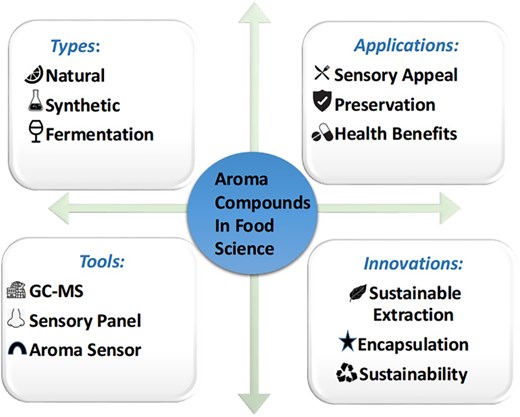
This review gives a comprehensive overview of aroma compounds. The focus on their definition and the challenges faced during the analysis of these compounds has been discussed in this review. Their classification, their sources of production, how they work, and what new technologies are being used to extract and analyse these compounds have also been highlighted in this review.
Background
Definition and nature
Aroma compounds are volatile molecules that evaporate at relatively low temperatures, contributing to the characteristic flavour and sensory identity of specific foods. Their volatility allows them to interact with olfactory receptors in the nasal cavity, making them easily perceivable by the human senses due to their low molecular weight and high vapour pressure (Starowicz, 2021). These compounds encompass a broad range of chemical classes, including esters, aldehydes, terpenes, alcohols, ketones, alkenes, alkanes, nitrogen-containing compounds (such as pyrazines and trimethylamine oxide), heterocyclic compounds (including thiazoles), and sulphur-containing compounds. Each chemical class imparts unique sensory notes: Esters produce fruity and floral aromas, aldehydes are associated with fresh and green scents, terpenes contribute citrusy or herbal characteristics, nitrogen-containing compounds provide roasted or nutty notes, and sulphur-containing compounds generate the pungent flavours typical of garlic, onion, and cooked meats (Liang et al., 2022).
The perception of these aroma molecules is strongly influenced by their structural features, including functional groups, stereochemistry, and molecular size. Even minor modifications in molecular structure can lead to markedly different sensory experiences. Additionally, the release and perception of aroma compounds during food preparation are modulated by physical parameters such as pH, temperature, moisture content, and the inherent volatility and stability of the compounds (Yang et al., 2024).
Nonvolatile compounds also play an indirect but crucial role in aroma formation, acting as precursors that are converted into volatile molecules during enzymatic reactions, fermentation, cooking, or other food processing methods. These biochemical transformations are essential for generating the characteristic aromas of food products (Rajendran et al., 2023). A classic example is the presence of glycosides in fruits, which serve as precursors to terpenes. During fruit ripening or processing, enzymatic hydrolysis releases the terpenes, giving the fruit its signature aroma (Liang et al., 2022). Similar principles apply to culinary processes: Cooking, baking, roasting, or grilling initiates Maillard reactions between amino acids and reducing sugars, generating a complex array of volatile compounds that impart the characteristic flavours and aromas of cooked foods (Semedo Tavares & Silveira, 2022; Shakoor et al., 2023).
Accurate characterisation and identification of aroma compounds require careful consideration of extraction and analytical techniques due to their low concentrations in food matrices. Proper sample preparation is critical to achieving high analytical accuracy, selectivity, and aroma recovery. Among the most commonly employed techniques is solid-phase microextraction (SPME), which utilises a coated fibre to selectively absorb volatile compounds, followed by thermal desorption for analysis. Another widely used approach is headspace sampling, which minimises matrix interference and facilitates the isolation of volatile aroma compounds for subsequent analytical detection (Pu et al., 2025).
By understanding the interplay between chemical structure, precursor compounds, and processing conditions, researchers can better predict, control, and enhance the sensory qualities of foods through targeted modulation of aroma compounds.
Food moisture significantly influences aroma volatility, diffusion, and release kinetics, thereby affecting aroma perception and overall sensory quality.
Chemical families of aroma compounds
Metabolomics analysis is helpful in the food industry for analysing the aroma of fresh foods (e.g., tomato, melon) and processed products such as wine and vegetable purees. Essential oils (EOs) are colourless liquids that have aromatic volatile compounds. They are widely used in perfumes, cosmetics, medicines, and food preservatives. Because of their aromatic, natural antimicrobial content, EOs and flavourings are used for preservation in the food industry. Monoterpenes and sesquiterpenes are found in citrus fruits, which are also sources of EOs (Bhavaniramya et al., 2019).
Phenolic bioactive compounds are present in sources like medicinal and aromatic plants (MAPS) and vegetables (Pinto et al., 2021). An excellent source of phenolic compounds, volatile compounds, and carotenoids is the Myrtaceae fruit family. This plant family also has important characteristics, i.e., agro-industrial potential and agrotechnical characteristics. It is also a good source of organic acids, vitamins, sugars, polysaccharides, polyphenols, and some important minerals that are used in making food products (de Paulo Farias et al., 2020). Table 1 demonstrates the prominent chemical families of aroma compounds.
Major chemical families of aroma compounds with their sensory characteristics and food sources.
| Chemical family | Key examples | Sensory notes | Common food sources | References |
|---|---|---|---|---|
| Esters | Ethyl butanoate, isoamyl acetate | Fruity, floral | Apples, bananas, berries | Liang et al. (2022) |
| Aldehydes | Benzaldehyde, hexanal | Fresh, green, nutty | Almonds, leafy greens | Xu et al. (2024) |
| Terpenes | Limonene, geraniol | Citrus, floral, herbal | Citrus fruits, herbs, and roses | Liang et al. (2022) |
| Sulphur compounds | Allicin, methanethiol | Pungent, savoury | Garlic, onion, cooked meats | Dini and Laneri (2021) |
| Ketones | Diacetyl, methyl ketones | Buttery, creamy, sharp | Butter, blue cheese | Sohail et al. (2022) |
| Alcohols | Ethanol, phenylethanol | Sweet, rose-like | Wine, rosewater | Quelal et al. (2023) |
| Phenols | Eugenol, guaiacol | Smoky, spicy | Cloves, smoked foods | Izcara et al. (2022); Mortzfeld et al. (2020) |
| Pyrazines | 2-Acetylpyrazine, trimethylpyrazine | Nutty, roasted, earthy | Cocoa, roasted coffee, nuts | Quelal et al. (2023); Mortzfeld et al. (2020) |
Historical perspective
In the 19th century, scientists were investigating EOs and their aromatic characteristics. This investigation piqued interest in aroma compounds and led scientists to begin studying them (David & Doro, 2023). As Mortzfeld et al. (2020) mentioned in their 2020 study, early chemists began this by isolating and identifying active molecules that were responsible for aromas in various natural materials. Vanillin, a very common aroma compound used in many products, was first discovered by a French chemist, Nicolas-Theodore Gobley, by isolating it from vanilla beans in 1858. In 1874, a German chemist, Ferdinand Tiemann, identified vanillin and synthesised it from coniferin (Xu et al., 2024). These types of discoveries led to the development of the synthetic flavours and aroma industries and resulted in efforts to understand how chemical structures have an impact on sensory perception.
In the middle of the 20th century, GC was introduced, which elevated aroma science (Yu et al., 2022). GC is an analytical technique that helps in the detection of volatile compounds by separating them from their complex mixtures. Through this technique, a detailed analysis of aroma profiles in food and beverages was made possible. Nevertheless, this technique had its limitations. It could not identify aroma compounds precisely, so scientists combined this technique with MS. This allowed precise identification of even trace-level volatiles. These analytical advancements were supported by the emergence of headspace analysis methods, which gave a noninvasive approach to capturing volatiles directly from food matrices (Starowicz, 2021).
Another important advancement was marked in recent decades, when GC was integrated with olfactometry (GC-O). This technique combines instrumental data with human sensory evaluation and uses trained sensory panels for the detection of odour-active compounds as they elute from the chromatograph (Mahmoud & Zhang, 2024). This method not only helps in the identification of the compounds present but also emphasises those that meaningfully contribute to the aroma profile (Egea et al., 2021). A broader shift in aroma research was reflected through this methodological evolution, from simply cataloguing compounds to studying their sensory relevance and interactions within complex food systems. Together, these advancements have placed aroma analysis as an important component of modern food chemistry and sensory science.
Role in food perception
Aroma compounds play an important role in tailoring how food is perceived, working along with taste and texture to produce a rich, multisensory eating experience (Le Quéré & Schoumacker, 2023). The human tongue can sense only five basic tastes: Salty, sweet, bitter, sour, and umami, while thousands of unique volatile molecules are detected through the sense of smell, each contributing delicate yet distinct nuances to flavour (Xiao et al., 2021).
When we consume a food product, we instantly perceive the aroma from that food. This happens in our body through two pathways called orthonasal and retronasal olfaction (Xiao et al., 2021). When we first see the food and smell it before tasting it, orthonasal olfaction occurs. At this time, only odour molecules are entering our nostrils through this pathway, giving us the aroma of the food. When we take a bite of our food and start chewing and swallowing it, retronasal olfaction occurs. This pathway causes the release of volatile compounds in our mouth, which move toward the nasopharynx and reach our olfactory receptors, which then detect the aroma of what we ate. This dual sensory mechanism merges with taste to create a unified and immersive flavour experience (Liu et al., 2025).
This interaction can be noticed in products like wine and coffee. The presence of volatile esters, terpenes, and thiols in wine contributes to floral, fruity, and earthy aromas, enhancing the tasting profile (He et al., 2023). Aromatic compounds such as furans, pyrazines, and phenols in coffee add depth to its naturally bitter and acidic aroma (Angeloni et al., 2021). Aroma and taste have not only an additive but also a synergistic relationship, as the sweetness, richness, or complexity of flavour perception is intensified by aroma.
This interaction is also demonstrated by fruits through their aroma compounds that not only influence flavour and taste but also describe their nutritional quality (Li et al., 2023a). These compounds belong to different chemical classes that include terpenoids, esters, lactones, ketones, acids, alcohols, and their derivatives (Şeker et al., 2021). These aroma compounds are modified by enzymes called uridine diphosphate-dependent glycosyltransferases (UGTs) that attach sugar molecules to them (Vare et al., 2024). Unstable aroma molecules are converted into more stable, water-soluble forms that act as reservoirs of fruit flavour through this glycosylation process. The broad range and specific expression patterns of these enzymes (UGTs) throughout fruit development are vital for the production of diverse glycosylated aroma compounds that contribute to the release of flavour and aroma retention (Liu et al., 2025).
Temperature is one of the important physical factors that significantly influences the perception of aroma compounds. When the temperature is increased, such as in cooking or baking, the volatile molecules are released. This is the reason that when we are baking a cake, we can smell it more during its baking than when we are preparing the batter (Genovese et al., 2021). Just like this, texture is also an important physical factor. Textures like creamy textures cause increased contact with the olfactory receptors because they stay in the mouth longer. The longer the food stays in the mouth, the more the aroma compounds will interact with the olfactory receptors (Caille et al., 2023). Many more physical factors like these influence the perception of aroma compounds, making them very important in culinary and sensory science (Lasekan et al., 2021).
Types and sources of aroma compounds
There are many sources of aroma compounds from which they can be derived. They are either naturally present, made synthetically, or undergo any process that produces them, like fermentation.
Natural sources
Natural aroma compounds, as their name indicates, are found naturally in biological sources. These sources include animals, plants, and microorganisms. These aroma compounds are either naturally present in them or undergo a process that produces them.
Plant-based foods like fruits, spices, and herbs contain esters, sesquiterpenes, and monoterpenes, because of which they have their specific flavour and aroma. Ethyl butanoate is an ester found in apples, giving them their flavour (Tang et al., 2025). Isoamyl acetate is another ester that gives bananas their flavour (Kumar et al., 2023). As mentioned earlier, spices like cloves have eugenol that gives them their aroma (Silva et al., 2024). Similarly, roses have their rosy and floral aroma because of the presence of geraniol (Mączka et al., 2020).
Animal-based foods such as meat produce aroma compounds when they are provided with heat, whether they are cooked, grilled, or roasted. Heating these types of foods leads to chemical reactions like the Maillard reaction. This reaction occurs due to the interaction of sugars and amino acids under heat, resulting in the generation of sulphur-containing and heterocyclic molecules that give the meat its savoury aroma (Sohail et al., 2022). Similarly, other processes like lipid oxidation also produce certain aroma compounds. A typical example of this occurs in dairy products like cheese and butter, where short-chain fatty acids undergo lipid oxidation to produce the particular aroma that these foods have (Tamura et al., 2021).
Introducing microorganisms to some foods also produces different aroma compounds. For example, exposing milk to lactic acid bacteria converts milk into cheese. During this process of conversion, aroma compounds are produced that give the cheese its unique flavour (Andriot et al., 2024).
Environmental conditions also play an important role in forming natural aroma profiles. The biosynthesis of aroma precursors in plants and animals is significantly impacted by variables such as soil quality, climate, and postharvest treatment. A noticeable regional difference in the aroma and flavour of food products results from these factors (Genovese et al., 2021).
Synthetic and artificial aromas
Synthetic aroma compounds are formed through chemical synthesis for the replication of sensory properties of natural flavours or the creation of entirely novel aromatic profiles. Since these compounds are affordable, stable, and uniform across batches, they are incorporated into processed foods, beverages, and confectionery products (Hadj Saadoun et al., 2021b). A prominent example of this is vanillin. It is often synthesised from guaiacol or lignin as a replacement for naturally derived vanilla extract in large-scale manufacturing (Yu et al., 2021).
Advancements in chemical engineering have allowed the production of synthetic molecules that closely imitate the complexity of natural aromas. This capability is illustrated in compounds like methyl anthranilate, used to reproduce grape flavour (Fallon et al., 2024), and ethyl maltol, which is recognised for its sweet and caramel-like character (Promhuad & Harnkarnsujarit, 2025). Synthetic aroma compounds are often subjected to public and regulatory inspection regarding their safety and long-term health effects, despite having advantages in production and formulation (Abd-Alrahman et al., 2024).
Fermentation-derived aroma compounds
Traditionally, food fermentation was primarily employed for preservation and the extension of shelf life. However, during fermentation, numerous enzymatic reactions occur that generate a wide range of by-products, among which aroma compounds are particularly significant. Microorganisms metabolise carbohydrates, proteins, and lipids present in food matrices, leading to the formation of volatile aroma compounds that impart distinctive flavours to fermented foods (Zhang et al., 2023). For instance, during the fermentation of milk to produce cheese, lactic acid bacteria synthesise compounds such as diacetyl, which contributes to the characteristic buttery flavour of cheese. Similarly, in blue cheese production, methyl ketones are formed, which are responsible for its distinctive aroma and flavour profile (López-Díaz et al., 2023).
The microorganisms most commonly associated with the production of aroma compounds—including alcohols, esters, and organic acids—during fermentation include yeast species such as Saccharomyces cerevisiae. Alcohol production through fermentation is widely exploited in the manufacture of alcoholic beverages such as beer and wine (Roberts et al., 2023). Additionally, traditional Asian condiments such as soy sauce and miso derive their umami flavour from volatile compounds produced during enzymatic reactions that degrade proteins and starches in the presence of moulds like Aspergillus oryzae (Ito & Matsuyama, 2021).
Fermentation has evolved from a traditional food preservation approach into a highly controlled biotechnological process capable of modulating aroma biosynthesis through microbial metabolism and process optimisation (Hadj Saadoun et al., 2021). During fermentation, microorganisms such as lactic acid bacteria, yeasts, and filamentous fungi transform carbohydrates, amino acids, and lipids into volatile aroma compounds via pathways including amino acid catabolism, esterification, and lipid oxidation (Hadj Saadoun et al., 2021). Advanced fermentation technologies allow precise control of parameters such as temperature, pH, oxygen availability, and substrate composition, enabling the targeted enhancement of desirable aroma profiles (Hadj Saadoun et al., 2021). Solid-state fermentation (SSF) has gained increasing attention due to its ability to intensify aroma production while reducing water and energy consumption (Hadj Saadoun et al., 2021). Moreover, recent fermentation strategies emphasise the valorisation of agro-food by-products, aligning aroma production with sustainable and circular food processing systems (Hadj Saadoun et al., 2021).
The formation of aroma compounds during fermentation is strongly influenced by several factors, including the type of microorganism employed, the composition of the substrate, and prevailing environmental conditions. These parameters are critical because each microorganism produces a specific profile of metabolites; even minor variations in microbial strains or fermentation conditions can lead to significant differences in aroma compound production (Yang et al., 2024).
In the modern era of food innovation, advanced fermentation technologies are increasingly being utilised to enhance aroma compound production. Manufacturers can deliberately stimulate the synthesis of desirable aroma compounds by modifying microbial metabolism through strain optimisation, improved feedstock utilisation, and strategic bioprocess design. Microorganisms such as Bacillus spp., Kluyveromyces spp., Komagataella phaffii, and various fungi used as starter cultures can be engineered to promote the formation of targeted aroma compounds while suppressing undesirable off-flavours. The selection of specific strains also ensures consistency in flavour development, allowing manufacturers to precisely control both the quality and quantity of aroma compounds produced during fermentation (Siddiqui et al., 2023).
In addition, SSF has emerged as an effective approach for the production of aroma compounds. Solid-state fermentation is particularly advantageous due to its ability to generate concentrated metabolites in low-moisture environments. This method utilises natural solid substrates, resulting in lower energy consumption, minimal waste generation, and improved downstream processing efficiency. Under SSF conditions, microorganisms experience mild stress, which stimulates secondary metabolic pathways and enhances the production of complex volatile compounds that contribute unique aromas to fermented foods. Furthermore, SSF supports sustainable bioprocessing by valorising agro-industrial wastes as fermentation substrates and converting them into high-value aromatic compounds (Siddiqui et al., 2023).
Beyond SSF, modern techniques such as ultrasonication-assisted fermentation and electro-fermentation have also been introduced. Ultrasonication involves the application of high-frequency waves that disrupt cell structures and modify enzyme activity, thereby enhancing metabolite release. This technique is commonly applied in winemaking to increase aroma complexity and improve the phenolic profile of wines. When combined with traditional fermentation processes, these advanced methods offer effective strategies for enhancing the production of volatile aroma compounds that define the sensory characteristics of fermented foods (Siddiqui et al., 2023).
Environmental and processing influences on aroma
Aroma compounds need to be volatile and stable for their proper functioning. But certain environmental factors, like temperature, pH, and moisture, can significantly influence aroma compounds (Burgos-Díaz et al., 2024). Take the example of coffee: When coffee beans are roasted, their aroma and flavour significantly increase. The reason for this is that high temperatures cause the Maillard reaction, which forms compounds like pyrazines and furans, giving us that beautiful aroma of coffee (Eggermont et al., 2023).
Likewise, processing methods also have a significant impact on these aroma compounds. Processes like ageing are done in food products like meat, wine, and cheese to enhance their flavour. In ageing, oxidative processes and enzymatic reactions occur that produce aroma compounds continuously. As long as they are undergoing ageing, the aroma compounds keep on forming. As a result, the products develop a strong and unique flavour (Dumitriu Gabur et al., 2019), (Li et al., 2021), and (You et al., 2024).
When food products are stored or distributed, they may be exposed to the environment, leading to additional reactions that can alter their flavour. To preserve the aroma and protect the food, packaging plays a significant role. Various technologies are employed to improve packaging. Modified-atmosphere packaging, which alters the gaseous environment within the package, is one of the technologies used, along with vacuum sealing, for this purpose. In this way, the integrity of volatile aromas is maintained throughout storage and distribution (Moradinezhad & Dorostkar, 2021).
Environmental and technological factors together emphasise the complicated balance between natural biochemistry and human-controlled processing in determining the final food sensory qualities. Their collective effect shows the importance of careful handling and precise control in the preservation or enhancement of desirable aroma characteristics. Figure 1 demonstrates the main types and sources of aroma compounds discussed in this section.
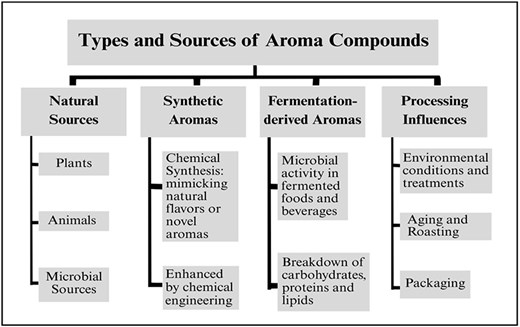
Overview of the types and sources of aroma compounds.

Chemical composition and analysis
The study of chemical compounds in flavour chemistry is known to cause aroma and/or taste. Taste panel studies determine whether the taste or smell of a food product is good, bad, or better than others. However, there is still a dispute about the type(s) of compound causing changes in the characteristics and the interaction between them. This can also be affected by temperature, formulation, and composition, etc., and how these affect consumers’ perception (Diez-Simon et al., 2019b).
The aroma profiles of young and aged Chinese rice wine were analysed by comparative aroma dilution extract dilution analysis (cAEDA). Forty-three total odorants were qualified and identified. In young and aged rice wine, the odour activity values (OAVs) showed a total of 33 aroma compounds with OAVs of ≥1. Through further analysis, the difference was confirmed through quantitative analysis in 34 wine samples that were 0–15 years old. The aromatic recombination allows the aromatic profile of aged rice to be stimulated (Chen et al., 2019).
Sample preparation is a critical step in aroma analysis. Techniques such as SPME, headspace analysis, and solvent-based extraction are commonly employed to isolate volatile compounds prior to instrumental analysis. These methods differ in sensitivity, selectivity, and suitability depending on the food matrix and the target aroma compounds.
Analytical techniques
Soy sauce is widely utilised in food processing as a flavour enhancer, largely due to its rich profile of volatile compounds, including ketones, aldehydes, and alcohols. These compounds play a critical role in defining the sensory characteristics of soy sauce and its contribution to processed foods. Aldehydes, in particular, display a wide spectrum of chemical and physical properties, necessitating the use of tailored analytical approaches for their identification and quantification. Small aldehydes, such as formaldehyde and acetaldehyde, are highly soluble in water, whereas fatty aldehydes require specialised detection techniques. GC–MS and LC–MS are effective for analysing short-chain aldehydes, while GC is commonly employed for longer-chain fatty aldehydes. For the extraction of ketones, aldehydes, and alcohols from soy sauce, techniques such as liquid–liquid extraction (LLE) and SPME are widely applied.
In recent studies on Chinese soy sauce aroma-type liquors, stir-bar sorptive extraction (SBSE) has been introduced as an advanced method for profiling volatile compounds. Stir-bar sorptive extraction offers high sensitivity, reproducibility, and selectivity, while being environmentally friendly. This technique facilitates the comprehensive analysis of aroma-related volatiles, including esters, aldehydes, furans, acids, phenols, and terpenes. Esters, although often contributing more subtly to the overall aroma, play a particularly important role at low temperatures. Using combined techniques such as GC-olfactometry/MS (GC-O/MS) with simultaneous distillation-extraction, specific ester compounds have been successfully identified in soy sauce matrices (Diez-Simon et al., 2019b).
Proper sample pretreatment is essential prior to extraction, as different compounds are concentrated in specific plant or substrate fractions. Common pretreatment approaches include grinding to reduce particle size and Soxhlet extraction for aromatic and medicinal plants. Hydrodistillation methods—comprising water distillation, steam-water distillation, direct steam distillation, and distillation with cohobation—are routinely employed for volatile compound recovery. Other extraction strategies include infusion, digestion, modified percolation, aqueous-alcoholic extraction, and fermentation-assisted extraction, each selected according to the physicochemical characteristics of the target compounds.
Modern techniques of aroma extraction
The emphasis on using modern methods for extracting aroma compounds has increased in recent years. Although traditional techniques like LLE and Soxhlet extraction are still used, newer technologies provide better efficiency, environmental advantages, and better preservation of delicate volatile compounds (Usman et al., 2022). Temperature-sensitive aromas can be lost or damaged under harsh extraction conditions; at this stage, these new methods can be instrumental.
Ultrasound-assisted extraction (UAE) is an extensively used technique. It employs high-frequency sound waves for the creation of microscopic bubbles in a liquid. These bubbles help in the breakdown of the cell walls of plants or food materials when they burst, effectively releasing aroma compounds. This technique also assists in maintaining the quality of sensitive aroma molecules (Usman et al., 2022). Ultrasound-assisted extraction was further combined with other techniques like supercritical fluid extraction (SFE) or pressurised liquid extraction (PLE). The purpose of this combination was to increase the yield of aroma compounds with decreased use of harmful substances. This way, the extraction of aroma compounds is made eco-friendly while increasing the efficiency. Combining the UAE with PLE was perfectly demonstrated in a study conducted in 2023 on pomegranate peels. The results showed improved extraction of aroma compounds (Singh et al., 2023).
Pulsed electric field (PEF) is another extraction technique utilised by many scientists for the same purpose. Pulsed electric field is a process in which electricity is utilised. Plant cells are exposed to a short burst of electricity that breaks open the cell membranes just temporarily. When cell membranes are opened, the contents inside the cell are released outside, aroma compounds being one of them. Then these aroma compounds are collected for further processing. Since this technique utilises electricity and not heat, it is a nonthermal method that can preserve those compounds that are heat-sensitive. Pulsed electric field is efficiently utilised by industries that make wine to improve the polyphenols extraction with other aroma compounds as well (Khadhraoui et al., 2021).
Microwave-assisted extraction (MAE) has also been widely used by researchers for extracting aroma compounds. This technique directly targets plant tissues. It heats the water molecules inside the plant tissues, releasing the content from inside, including the aroma compounds. Since heating is done using microwave energy, the results are achieved quickly and efficiently, saving energy and requiring a very low amount of solvent (Usman et al., 2022).
Some other extraction techniques, like enzyme-assisted extraction (EAE) (Ali et al., 2022) and instant controlled pressure drop (DIC) (Khadhraoui et al., 2021) are also used. Moreover, SFE is also used (Usman et al., 2022). Enzyme-assisted extraction, as the name suggests, uses enzymes for the extraction of aroma compounds. Controlled pressure drop uses pressure, and SFE uses gases to improve the extraction and make it more efficient (Usman et al., 2022).
For food products like meat and its derivatives, different aroma techniques are used. These techniques include dynamic headspace extraction, SPME, and SBSE. The reason for using these techniques specifically for these food products is that these techniques can easily extract volatile compounds during lipid oxidation, fermentation, and Maillard reactions. When using these techniques, there is a chance that aroma compounds may be lost, so these techniques are further combined with GC-O. This not only decreases this risk but also increases precision (Bleicher et al., 2022).
With technological advances, a new, effective, and efficient membrane-based method for extracting aroma compounds has emerged: selective pervaporation. This process works by exposing aroma compounds in a liquid feed to an organophilic membrane. Various organophilic membranes can be used, such as poly(dimethyl siloxane), poly(octyl methyl siloxane), and poly(ether-block-amide). Hydrophobic aroma compounds are absorbed and transported by these membranes, leaving water behind. This technique can even concentrate trace-level aroma compounds in the permeate. It achieves this by applying a vacuum that creates a chemical potential gradient, thereby driving the selective vaporisation and permeation of aroma compounds.
The pervaporation technique can be used to extract various classes of aroma compounds, including esters, ketones, aldehydes, terpenes, and sulphur compounds. Concentrated aroma compounds are achieved through this technique due to the membrane’s strong affinity for the aroma solutes, and the process is operated at low temperature to prevent thermal degradation of the aroma compounds. Another benefit of utilising this technique is that it does not use any solvents; therefore, the structural integrity of sensitive aroma compounds can be preserved (Castro-Muñoz et al., 2023).
In fruit juices, fermented beverages, and plant extracts, selective extraction of aroma compounds is challenging owing to the complex aqueous matrix and the hydrophobicity of these compounds. In these types of food systems, selective pervaporation comes in handy (Castro-Muñoz, 2019; Castro-Muñoz et al., 2023).
Emerging technologies in aroma analysis
Traditional analysis methods are being used for aroma analysis, but they have their limitations as they cannot detect aroma compounds in complex food systems. New technologies have emerged to deal with this issue and have made the analysis of aroma compounds faster and more efficient.
Selective pervaporation has emerged as a promising membrane-based technology for the recovery and extraction of aroma compounds from food systems (Castro-Muñoz et al., 2020; Castro-Muñoz et al., 2021). The process relies on the selective permeation of volatile compounds through a dense membrane, followed by evaporation under reduced pressure, enabling efficient separation at relatively low temperatures (Castro-Muñoz et al., 2020). Compared to conventional thermal extraction methods, pervaporation minimises aroma degradation and preserves sensory integrity (Castro-Muñoz et al., 2021). This technique has been successfully applied for the selective separation of aromas, fragrances, and essential solutes from agro-food products and processing wastes, highlighting its potential as a sustainable alternative for aroma recovery (Castro-Muñoz et al., 2020, 2021).
The most common among these new analysis techniques is GC-O. This technique involves a regular GC system connected in such a way that humans can also assess the aroma compounds. The techniques work like this: A part of the sample goes to the detector, and a part of the sample is sniffed by trained personnel through a sniffing port. This technique helps to match chemical signals with how something smells to humans. Meat products like beef, chicken, pork, and lamb have been studied for aroma using this technique (Bleicher et al., 2022). The aroma of white tea was analysed in one study using GC-O during its ageing, and 19 primary aroma compounds were identified (Ma et al., 2023).
The electronic nose (E-nose) is another emerging technology. As the name suggests, this device is an electrical nose that works the same as a human nose. This device detects different aroma compounds in foods and then converts that information into digital signals. Entirely replacing human smell tests is a bit difficult to achieve, but this device makes a little better alternative to it. It can help with the detection of meat freshness and spoilage. It is a cost-effective and a fast alternative for sensing aroma compounds in foods. Many studies have demonstrated the detection of storage issues in meat using E-noses. Not only this, but it has also been used in the identification of the feed an animal was given (Bleicher et al., 2022). But this method still has its limitations, with limited sensor types, and handling large datasets is complex.
Another modern technique being used for the analysis of aroma compounds is proton transfer reaction-MS (PTR-MS). Scientists use this technique for the observation of aroma compounds in real-time without the preparation of samples beforehand. Proton transfer reaction-MS ionises aroma molecules using water vapours for the quick measurement of these aroma compounds. A study conducted in 2023 utilised this technique to monitor how aroma compounds in baijiu were perceived by people (Chen et al., 2023).
Comprehensive two-dimensional GC (GC x GC) has been recently used for the analysis of aroma compounds with complex profiles. Just like its name, this analysis technique gives a comprehensive and detailed analysis of aroma compounds. Even those volatile compounds that are present at trace levels are detected by this technique. To make it a stronger and powerful tool for the efficient and fast analysis of aroma compounds, scientists combine this technique with olfactometry and time-of-flight MS (GC × GC-O-TOF-MS). A study showed that the combination of these techniques increased the detection of volatile compounds by 60%. Researchers have used this technique to study aroma compounds in soy sauce, watermelon juice, black tea, cream, and baijiu (Li et al., 2023b).
Some studies also suggest the use of spectroscopic techniques for the analysis of aroma compounds. Spectroscopic techniques are imaging techniques that use different wavelengths for the analysis. It includes near-infrared, mid-infrared, and hyperspectral. Researchers use these techniques for the quick and nondestructive analysis of these compounds. Preparation of the sample is also not necessary for these techniques. Hyperspectral imaging involves a combination of chemical data and images. In this way, it gives a very detailed analysis of aroma compounds. The data produced by these imaging techniques is then processed using special mathematical tools called chemometrics. Honey, coffee, olive oil, wine, and dairy are some of the foods mentioned in studies to have undergone this technique for aroma analysis (Mendes & Duarte, 2021).
Challenges in analysis
Analysing these compounds is very challenging. The reason it is so tricky is that even a small change in structure influences the final flavour perception. Another reason is the interaction of these compounds with each other, which can result in either a stronger or weaker flavour. Knowing the composition of food is not sufficient; the interactions and behaviours of the compounds also require an understanding (Regueiro et al., 2017).
Another challenge is the complexity of food itself. Every food has its unique structure, or “matrix”, made up of fats, proteins, water, and more. This structure can change how we perceive flavours. For example, the same compound might taste different in yoghurt compared to juice. Moreover, the visualisation and modelling of the relationship between foods and what is tasted by people is complex for scientists (Regueiro et al., 2017) .
During the processing of food, aromatic compounds are formed through nonenzymatic reactions. These reactions include Caramelisation, Maillard reactions, and the oxidative and thermal degradation of lipids, proteins, pigments, vitamins, sugars, and ribonucleotides. This can become a challenge because, when specific nutrients degrade, they result in other chemical reactions, causing a change in the formation of aroma compounds. All these challenges make it difficult for scientists to recreate the flavour of food products, so more research is needed to solve these issues for the better creation of these flavours (Diez-Simon et al., 2019b).
Role in food science and applications
Through sensory analysis, the aroma of food products can be evaluated (Rocha et al., 2022). Five basic taste types (sweet, salty, umami, and bitter) are supplemented by the specific perception of many different aroma compounds. Aroma has the most important contribution of odorous volatile substances. Mainly, volatile compounds influence the aromatic characteristics of food. Nonvolatile compounds also contribute to the sensory aroma profile, either flavouring or flavour precursors (Diez-Simon et al., 2019b). Around 230 volatiles are identified as “key food odorants” (KFO) and are the best agonists for about 400 human olfactory receptors. According to research, a small subset of 3−40 agonists has been determined for 227 different food commodities. For example, butter aroma contains only three compounds, i.e., diacetyl, (R)-δ-lactone, and butyric acid. These compounds are present above their odour threshold value and give a buttery aroma. 20 KFOs is the main odorant space in food (Schieber & Wüst, 2020). Volatile phenols such as phenylpropanoids and benzenoid compounds originate from aromatic amino acids such as phenylalanine and are responsible for the aroma in herbs, spices, and fruits (Schieber & Wüst, 2020). Aroma extraction dilution analysis is used for the extraction from Japanese soy sauce. It has been seen that 330 odour-active compounds in the flavour dilution range from 8 to 4,096, and only 2-phenylethanol showed the highest FD factor out of 4,096. After which, other components such as 3-(methylsulfanyl) propanal (methional), tautomers 4-hydroxy-2-ethyl-5-methyl-3(2H)-furanone (4-HEMF), 4-hydroxy-2,5-dimethyl-3 (2H)-furanone (4-HDF), and 3-hydroxy-4,5-dimethyl-2(5H)-furanone (sotolone), all showing FD factors of 1,024.
Food quality and acceptability
The different buttery aroma contains only three compounds, i.e., diacetyl, (R)-δ-lactone, and butyric acid (Schieber & Wüst, 2020). According to different studies based on the aroma and sensory profile of different foods, a special issue of “Flavor and Aroma Analysis as a tool for Quality Control of Foods” was taken into account. Four main topics that were studied were (i) the effect of agricultural practices, (ii) the effect of different processing conditions, (iii) food characterisation, and (iv) consumers’ acceptability toward food and perception (Calín-Sánchez & Carbonell-Barrachina, 2021).
Lipids are responsible for both desirable and undesirable flavours of foods. Lipid is a food’s main component; its oxidation is responsible for the off-flavour of food. Food flavour is responsible for interactions between aroma, oral sensations, and taste. Here, aroma is mainly linked with volatile compounds, and taste is linked with nonvolatile high molecular-weight components (Shahidi & Hossain, 2022).
For describing different flavour profiles of a product, traditional sensory evaluation methods are used. It is mainly done by collecting, classifying, summarising, and organising specific sensory attribute descriptors, forming a clear flavour profile of the food. For tracing aromas and classifying different types of tea, chocolate, oils, and coffee, sensory wheels are used (Tang et al., 2024).
Polyphenols play an important role in antioxidant activity, preservation, and colour of foods. Phenolic compounds such as caftaric acid and tannins impart astringency and bitterness in food (Schieber & Wüst, 2020). Pleasant flavour notes that are present in fresh green, fruity, floral, and tea-like aroma are systematically observed in blueberry germplasm and classified as “aromatic genotypes”, a term that is used in breeding jargon (Ferrão et al., 2022).
Preservation and analysis
Food quality plays a crucial role in product development, with various parameters—such as ripening—being carefully monitored to maintain shelf life. In the case of extra virgin olive oil (EVOO), product quality in combination with storage conditions determines its shelf stability. The variety of olive oil is directly influenced by its intrinsic quality, particularly the levels of polyphenols and polyunsaturated fatty acids (Dini & Laneri, 2021). The desirable flavour of olive oil is closely associated with its nutritional value and health-promoting properties, which contribute to its widespread global consumption. Therefore, it is essential to standardise and evaluate multiple parameters, including organoleptic characteristics, to ensure the maintenance of EVOO’s quality. Proper handling and storage of EVOO help prevent product deterioration, and studies provide comprehensive insights into the compounds responsible for its unique flavour and aroma, the mechanisms of degradation, and its characteristic organoleptic attributes. Consequently, exploring strategies to preserve and extend the shelf life of EVOO and its bioactive components is critical (Garcia-Oliveira et al., 2021).
Phenolic compounds with a C3 side chain are commonly found in herbs, spices, and fruits. In fermented foods such as alcoholic beverages, microbial activity often shortens this side chain, influencing the sensory profile of the product (Schieber & Wüst, 2020). The complexity of wine composition arises from hundreds of chemical compounds, including water, glycerol, organic acids, ethanol, polyphenols, and carbohydrates. Minor constituents such as terpenoids, pyrazines, higher alcohols, and ethyl esters, despite their low concentrations, significantly impact wine flavour and aroma. Terpenoids, in particular, are critical for grape quality, adding floral notes to wine; however, excessive levels can alter the desired aroma profile (Prusova et al., 2022).
Aroma compounds, being volatile organic molecules, are highly sensitive to migration and interaction with packaging materials. Reinforced bioplastics have demonstrated improved barrier properties against gas and vapour transport through the incorporation of nanofillers and natural fibres. These modifications increase the tortuosity of diffusion pathways, limiting the permeation of volatile aroma compounds and gases that could degrade organoleptic quality. Enhancing surface hydrophobicity—for example, through the use of lignin-rich cellulose fillers—increases the water contact angle, reducing water uptake, which in turn diminishes the sorption and migration of polar aroma compounds. Additionally, the chemical interactions of aroma compounds are influenced by the material’s surface properties and free volume; optimising filler dispersion and surface characteristics minimises undesirable binding within the packaging matrix. Striking a balance between active packaging functions and minimal impact on flavour is essential, as improperly selected active compounds may alter sensory attributes (Siddiqui et al., 2024).
Edible films composed of chitosan and gelatin, enriched with plant extracts, offer enhanced barrier, antioxidant, and antimicrobial properties, which help reduce oxidative degradation and microbial spoilage. The synergistic interaction between chitosan, gelatin, and phenolic compounds from plant extracts enhances film functionality, contributing to an extended shelf life and improved maintenance of sensory attributes such as aroma and texture in products like seafood. These active edible coatings are, therefore, effective in preserving organoleptic quality during storage (Eranda et al., 2024).
The retention and release of aroma compounds are strongly influenced by the physicochemical properties of packaging materials, particularly surface wettability, permeability, and polymer–aroma interactions (Ataei et al., 2020; Moradi et al., 2023). Aroma scalping, defined as the absorption or adsorption of volatile compounds by packaging polymers, can significantly reduce sensory quality during storage (Ataei et al., 2020). Surface wettability governs aroma diffusion behaviour at the food–polymer interface and directly affects aroma migration and perception (Moradi et al., 2023). Recent advances in reinforced bioplastics have demonstrated enhanced barrier properties and reduced aroma loss compared to conventional polymers (Ataei et al., 2020). In addition, edible films and coatings based on gelatin–chitosan matrices offer promising approaches for aroma preservation due to their tunable wettability and ability to incorporate bioactive compounds (Moradi et al., 2023). Engineering packaging materials with optimised surface properties is, therefore, critical for maintaining the organoleptic quality of aroma-rich foods.
Surface wettability also plays a critical role in food packaging by influencing moisture interactions, barrier performance, and food-package adhesion. Increasing surface hydrophobicity, as indicated by a higher water contact angle, can reduce aroma scalping and improve aroma retention by limiting the absorption of nonpolar volatile compounds into polymeric packaging materials. Tailoring surface wettability through material modification is, therefore, an important strategy for preserving the organoleptic properties of food products (Eranda et al., 2025).
How aroma compounds signal freshness or spoilage?
Decarboxylation of ferulic acid yields 4-vinyl guaiacol, guaiacol, and phenol in coffee roasting. Wood pyrolysis yields different volatile phenols and also has antioxidative and aromatic properties of smoke. It is also used for food conservation by smoking and wine aromatisation (Schieber & Wüst, 2020).
The degradation degree of EVOO is measured by the quantification of peroxides and is also used in determining the expiry of the oil (Garcia-Oliveira et al., 2021). Aroma compounds should be able to retain the polymeric matrix, and when released, they should be subject to a triggering effect. These two parameters are to be fulfilled, and to be used for food products. Proteins and polysaccharides are biopolymers that can retain aroma compounds and also release them due to modifications in structure when temperature and relative humidity change (Wicochea-Rodríguez et al., 2019).
Several naturally occurring macromolecules and bioactive compounds play a dual role in food systems by contributing indirectly to aroma perception while also supporting the stability and maintenance of volatile aroma compounds. Mangiferin does not function as an aroma compound itself; rather, it contributes to aroma preservation by limiting oxidative degradation and stabilising volatile compounds within the food matrix. By limiting lipid oxidation and reactive oxygen species formation, mangiferin contributes to the preservation of natural aromas and fragrances in food matrices rather than acting as a direct aroma compound (Castro-Muñoz et al., 2024).
Similarly, carminic acid and arabinoxylans influence aroma stability through noncovalent interactions with volatile compounds, thereby modulating aroma retention rather than contributing directly to aroma generation. Carminic acid, a natural anthraquinone-derived compound primarily used as a colourant, has been reported to interact with food matrices through hydrogen bonding and molecular association. Such interactions can influence the coaroma associations that affect overall sensory perception (Ferreyra-Suarez et al., 2024). Arbinoxylans, hemicellulose polysaccharides extensively reviewed for their functional roles in food formulations, contribute to aroma maintenance by modifying viscosity, water binding, and microstructure. These properties affect the release, retention, and perception of volatile aroma compounds, enabling controlled aroma release and improved sensory persistence in formulated foods (Hernández-Pinto et al., 2024).
Functional foods and health
Functional beverages (FBs) are an important category of functional food products, valued not only for their health-promoting properties but also for their sensory characteristics, affordability, and consumer suitability. The presence of specific nutrients and bioactive molecules (BAMs), both volatile and nonvolatile, contributes to the multiple health benefits of FBs, making their production an area of growing interest (Maleš et al., 2022).
Natural organic macromolecules play a vital role in aroma stabilisation and coexistence within food matrices (Castro-Muñoz et al., 2024; Ferreyra-Suarez et al., 2024; Hernández-Pinto et al., 2024). Mangiferin, a polyphenolic compound, exhibits antioxidant properties and interacts with volatile compounds, contributing to aroma stability during processing and storage (Castro-Muñoz et al., 2024). Carminic acid, widely used as a natural colourant, also participates in molecular interactions that reduce aroma loss (Ferreyra-Suarez et al., 2024). Arabinoxylans, nonstarch polysaccharides present in cereal-based foods, enhance aroma retention by modifying matrix structure and forming hydrogen bonds with volatile compounds (Hernández-Pinto et al., 2024). These biomolecules collectively contribute to sustained aroma perception in natural food products (Castro-Muñoz et al., 2024; Ferreyra-Suarez et al., 2024; Hernández-Pinto et al., 2024).
In 2019, Monascus-fermented cheese (MC), a novel fermented dairy product, was developed. In traditional cheese ripening, moulds such as Penicillium roqueforti in blue cheeses and Penicillium camemberti in Camembert cheeses are used. These moulds exhibit strong proteolytic and lipolytic activities, leading to increased production of esters, ketones, fatty acids, and aldehydes, which are largely responsible for the characteristic cheesy flavour. In MC, two primary methods are employed: One mimics conventional cheese production, while the other replicates Camembert cheese preparation, involving either internal or surface mould development. The first method typically generates a stronger odour, whereas the second allows for a shorter ripening period (Wang et al., 2024).
Aroma is one of the most critical sensory attributes of food, influencing consumer preference and acceptance. It also serves as a distinguishing feature among different foods, encompassing fragrance, odour, and overall aroma. For example, Goji berries are incorporated into various beverages, bakery products, dairy items, meat preparations, and confectionery due to their nutritional and health benefits, including antiageing, antifatigue, and vision-enhancing properties (Vidović et al., 2022).
Bioactive molecules present in FBs not only provide health benefits but also support overall human well-being. These compounds, often derived from aromatic plants, have medicinal properties and supply essential nutrients such as amino acids, BAMs, and fatty acids, making them key components in the development of FBs (Maleš et al., 2022).
Polyphenolic compounds, such as those found in pine, are structurally classified based on the arrangement of their phenolic rings, which differentiates them into flavonoids, lignans, and stilbenes. The typical structure of phenols and flavonoids is C6-C3-C6, consisting of two aromatic rings linked by three carbon atoms forming an oxidised heterocyclic ring (ring C), which is crucial for their bioactivity (Dziedziński et al., 2021).
The technical readiness level (TRL) system has been developed to evaluate innovation performance, providing criteria and metrics for performance assessment based on TRL concepts and aromatherapy applications (Hasanah et al., 2020). Aromatherapy production processes, such as those at Syiah Kuala University’s EO processing laboratory (ARC), focus on the extraction of EOs and derivatives. Common EOs utilised include cinnamon, menthol, camphor, and carrier oils (Muhammad et al., 2022).
In wine production, the extraction of aroma compounds from grapes is influenced by enzymatic activity. Glycosidases, in particular, enhance the aroma of white wines by releasing odourless glycosides, especially in monoterpene-rich varieties. Both endogenous and exogenous enzymes play key roles in the formation of aromatic compounds (Espejo, 2021).
Vanilla contains approximately 200 aroma compounds that contribute not only to its flavour but also to its therapeutic functions. It has been used in culinary and medicinal applications for over a century (Kaur et al., 2020). Myrcene (β-myrcene), a prevalent monoterpene in many plant species, exhibits antioxidant, antiageing, anti-inflammatory, anxiolytic, and analgesic properties (Surendran et al., 2021).
Some bioactive compounds in functional foods, such as mangiferin, do not function as aroma compounds directly but play a critical role in maintaining natural aromas by inhibiting oxidative reactions that degrade volatile fragrance molecules in plant-based systems (Castro-Muñoz et al., 2024). Similarly, carminic acid, a naturally derived compound, interacts with food matrices through molecular associations, stabilising sensory attributes and supporting the coexistence of colour and aroma cues important for natural fragrance perception (Ferreyra-Suarez et al., 2024). Arabinoxylans, polysaccharide macromolecules, influence food microstructure and water-binding capacity, thereby affecting the retention, release, and perception of aroma compounds, which supports sustained aroma presence in functional food formulations (Hernández-Pinto et al., 2024).
Innovations in aroma research
Over the past few years, analysis of fragrance and flavour has been standardised. Specific guidelines by the International Organization of Flavour Industry have been published. For identification of flavours and fragrances, GC–MS and LC–MS are used, and quantification for flavours, fragrances, and EOs. Volatile organic compounds are extracted through several techniques, including steam distillation, simultaneous distillation extraction, solvent-assisted flavour extraction, SBSE, and direct-immersion solid-phase micro extraction (Gou et al., 2023). Other technologies include encapsulation (Saifullah et al., 2019) and MS (Diez-Simon et al., 2019b).
A wide variety of aroma compounds are produced and emitted from plants and are used in cosmetics, the food industry, and health care (Zhang et al., 2024). Volatile organic compounds such as polyphenols are responsible for aromatic features; they also have an important role in the quality of vegetables, MAPs. Horticultural practices for flavour enhancement are still not an easy task, and multiple factors affect it, such as the synthesis of volatile compounds and nonvolatile compounds, which are responsible for flavour attributes, including climate, agricultural practices, and pre- and post-harvest processing operations that play a key role (Pinto et al., 2021).
From 2018 to the present, more research has been done on sensory evaluation and identification of olfactory receptors and consumer behaviour during food chewing and processing (Shan et al., 2024). Further research is needed on off-flavours and the cause of inconsistent aroma of fruits, vegetables, and the quality of products. So, for clarifying these products more, science and technology are used, often based upon GC–MS and GC-O, and combined with OAV, aroma reconstitution experiment, and omission test. These technologies are used to quantify, qualify, and describe flavour at the molecular level. These techniques help in the formulation of a better aroma of food and the composition of food (Gou et al., 2023).
Electronic noses employ an array of chemical sensors with varying specificities that react to volatile organic compounds present in gases collected from different samples. The metal-oxide-semiconductor sensor is based on the adsorption of gas molecules, which induces a change in conductivity. The change measured in conductivity corresponds to the amount of volatile organic compounds being adsorbed (Bonah et al., 2020).
Various parameters are considered when selecting a laboratory, such as high ethanol and SO2 concentrations, tolerance to acidic conditions, and compatibility with selected yeast strains (Carpena et al., 2020).
Challenges and limitations
Technical barriers
Food aromas are mixtures of compounds, making it difficult to isolate individual compounds. Extraction methods, such as solvent extraction, are used to isolate food flavour compounds. Because food contains both lipid and flavour compounds, lipid compounds must be removed to isolate the flavour compounds. As a result, this application is limited by the wide variety of lipids in meals (Reshna et al., 2022).
In paper-based food packaging, films and barrier coatings serve as protective layers that prevent food from interacting with odours, gases, moisture, oils, grease, and water. This maintains the quality of packaged food. Gases such as oxygen, especially, cause off-flavours, texture changes, and rancidity of unsaturated fats in food through oxidation. Active barriers are used by food industries for packaging that compromise the quality by affecting specific characteristics, such as aroma, decreasing shelf life, and texture due to the release of components into the packaging (Tyagi et al., 2021).
In the food industry, the replacement of thermal processing with nonthermal processing is trending, enabling the preservation of antioxidant compounds, vitamins, taste, natural pigments, and aroma compounds (Campelo et al., 2020). Because of unexpected flavours in algal biomass, they are not acceptable, yet they have high nutritional content. Some ways to reduce the impact of undesirable flavours in algae products are: (i) avoid the synthesis of biomass, (ii) its liberation should be avoided (through encapsulation), (iii) mask with other flavours, (iv) avoid its generation in processing, and (v) removal in one of the processing steps (Colonia et al., 2023).
Baijiu is a popular alcoholic beverage widely consumed in China. It has a rich scent and flavour. The flavour of baijiu is due to its trace components. So, it is important to extract these components. Techniques employed include direct injection (DI), LLE, and solid–liquid extraction. A less processing technique allows less loss of trace components during sample preparation, such as DI. However, a few pretreatment steps in the process result in the loss of trace components when combined with GC–MS (Wang et al., 2022).
Qualitative and quantitative characterisation of odours is conducted using direct or indirect methods (Conti et al., 2020). Consumers are not fully accepting plant-based food products due to their sensory properties. An After taste can still be noticed even after applying spices and herbs. It is thought that the beany odour is due to secondary lipid oxidation products or derivatives, and also due to the natural presence of saponins and isoflavones, which cause a bitter-astringent taste (Sha & Xiong, 2020). Fortified products, such as dairy proteins, are also experiencing aroma challenges (Su et al., 2020).
Regulatory issues
The European Food Safety Authority and the U.S. Food and Drug Administration are regulatory bodies that evaluate synthetic and natural flavours before approving their use in various food products. Over the past 10 years, research on aroma compounds and their use in the food industry has grown substantially. Thermal processing speeds up specific chemical reactions, such as the Millard reaction, Caramelisation, and Lipid oxidation (Urlass et al., 2023). According to research, PAHs were detected in tea and coffee samples, with an Incremental Lifetime Cancer Risk (ILCR) below 1 × 10⁻⁴; these samples were sold in Iran. ILCR value is considered acceptable only if below 10−6. Values between 10−6 and 10−4 are dangerous for health (Sampaio et al., 2021). Odour impact criteria are considered for odour concentration; if thresholds are exceeded, specific compounds, such as hydrogen sulphide or ammonia, are often used in areas without odour control. In some European countries, for example, France, odour limits are set as Emission values in ouE.s−1 or ouE.s−1 (Bokowa et al., 2021).
Different algal species also play an important role in shaping the aroma profile of algae, as well as geographical area, postharvest processing, and seasonality. Identifying the causes of changes in volatile profiles among algal species supports the development of improved food products (Urlass et al., 2023).
Essential oils are widely used in food products, cosmetics, animal feed, and pharmaceuticals, and are promising as safe food alternatives and natural food additives. Also, research shows they have antioxidant and antimicrobial activity. Because of their poor water solubility, oxidation susceptibility, and volatility, they are also restricted. Consumers consider it safe because of the word “natural”. But this is more than just simple, because the toxicity of EOs should be taken into consideration (Tsitlakidou et al., 2023).
Polycyclic aromatic hydrocarbons (PAHs) are chemical compounds that are made of carbon and hydrogen molecules arranged cyclically. They show carcinogenic effects, because of which several countries have set a limit according to them; these have to be used. According to the WHO and European Commission, PAH concentrations should be limited in food products with the help of different strategies for their formation (Sampaio et al., 2021).
The use of nanotechnology by different industries is in. In the USA, the Food and Drug Administration regulates the use of nanotechnology by different food industries (Ranjha et al., 2022). About 1%–2% of flavour compounds are crucial for the quality of liquor, smell, and taste. By monitoring these factors (temp, fermentation profile, and environmental factors), the initial microbiota can be assessed (Wu et al., 2021).
Future perspectives
New technology is setting trends in making better food products by enhancing and preserving their characteristics, such as taste, aroma, long-term storage, packaging, and appearance, for consumer acceptability. Technology such as Nanotechnology (Nile et al., 2020), Nano-encapsulation, Electrospinning, and (Ataei et al., 2020), and MS (Diez-Simon et al., 2019b).
Nanoparticle use in food packaging is not harmful compared to its use in food ingredients. Invariably, a risk is associated with nanotechnology. This can cause DNA damage, cell membrane disruption, and eventually cell death. Growing consumer chemophobia toward chemically synthesised aroma compounds has significantly influenced market trends, driving increased demand for natural, bio-derived, and clean-label flavouring solutions, alongside stricter regulatory scrutiny and transparency requirements. Use of nanotechnology in foods, according to guidelines, can improve the processing of food products (Nile et al., 2020). Biosensors detect odours and play an important role in biological transformation, yet have not been analysed comprehensively. Further assessment is required for their suitability in different fields and applications (Full et al., 2021).
For analysing VOCs in meat, different methods are available. Feeding and preslaughtering can affect the odour of cooked meat. Postmethods are available that control the aroma from slaughtering to the table. More awareness is needed for consumers about the cooking procedures and usage of types of fat, to have a better aroma profile and reduce food wastage. Qualitative and quantitative evaluations of properties are needed for Volatile Organic Compounds (VOCs) (Bleicher et al., 2022). For enzyme optimisation in wine, immobilised and embedded enzymes, different biotechnological tools are studied (Espejo, 2021).
For different foods, different extraction methods are used. For example, limonene extraction has evolved by shifting to greener solvents. For extracting limonene from orange peel, hexane was traditionally used. It is now recognised as both a health and environmental hazard. Suitable alternatives include cyclopentyl methyl ether and 2-methyl-tetrahydrofuran. These are bio-based and have been shown to improve limonene yields by four and two times, respectively (Ibáñez et al., 2020). Biocatalysis is a process in which aromatic and fragrant compounds (biochemicals) are converted from diverse precursors. These are not just limited to making aromatic notes (Hadj Saadoun et al., 2021a).
Monoterpene hydrocarbon, such as limonene or 4-isopropenyl-1-methylcyclohexene (C10H16), gives a lemon-like odour. It also keeps pests away from crops and is now valuable for agriculture. It can usually be obtained (90%) from citrus peels and pulps by cold pressing. Limonene extraction by the traditional hydro-distillation method can be replaced by time-saving and eco-friendly methods, i.e., SFE (Ibáñez et al., 2020). The stability of aroma and flavours is important as they are the first impressions of the food material. The volatile nature of flavours makes them susceptible to change in pH, acid, salt, moisture, and enzymes. Encapsulation is a method used to protect both the flavour and aroma of food products (Saifullah et al., 2019).
Future research on aroma compounds is increasingly influenced by consumer perception and regulatory expectations (David & Doro, 2023). Growing chemophobia toward chemically synthesised aroma compounds has shifted consumer preference toward natural and clean-label flavourings (David & Doro, 2023). This trend has driven innovation in biotechnological production, green extraction techniques, and sustainable aroma sources (David & Doro, 2023). Regulatory pressure and market demand now emphasise transparency and safety, positioning naturally derived aroma compounds as a central focus of future food innovation (David & Doro, 2023).
Conclusion
Controlling aroma release during food consumption presents several challenges due to the complex nature of the oral environment. Designing foods with enhanced sensory qualities requires advanced approaches and a deeper understanding of aroma transmission and perception during oral processing (Shan et al., 2024). Eco-friendly alternatives to synthetic preservatives and antioxidants, such as Butylated Hydroxyanisole (BHA) and Butylated Hydroxytoluene (BHT), are increasingly being explored for their potential to enhance aroma stability while meeting clean-label and sustainability expectations. Aroma compounds not only define flavour but also play a vital role in consumer preference and product preservation. The diverse aroma profiles of products such as wine, spices, coffee, and chocolate contribute significantly to the emotional and cultural dimensions of food consumption. The complexity and diversity of aroma compounds are influenced by numerous biochemical and environmental factors, including sources derived from fermentation, natural extracts, and synthetic production.
Looking ahead, the development of aroma compounds is increasingly shaped by consumer preferences for naturally derived ingredients due to chemophobia toward synthetic flavours, despite their proven safety. This trend has accelerated research into bio-based aroma compounds and macromolecules capable of both generating and stabilising natural fragrances in food systems. Balancing sensory quality with consumer perception remains a central challenge in advancing sustainable flavour technologies.
Recent technological advances, such as GC-O and MS, have greatly improved the identification and characterisation of aroma compounds. Encapsulation and emulsion technologies, often combined with other sustainable practices, hold significant potential for controlled aroma release and preservation in food research. However, challenges remain, including replicating the texture and flavour of plant-based alternatives and navigating complex regulatory frameworks. Further research is needed to optimise food packaging and preservation strategies that maintain aroma and sensory quality.
Future innovations, including electrospinning, sustainable extraction techniques, and nanotechnology, are expected to expand the applications of aroma compounds in food science. By addressing current limitations and exploring novel approaches, these advancements promise to enhance food processing technologies, ensuring the safe and environmentally responsible use of aroma compounds while maintaining or improving sensory attributes.
Data availability
Not applicable.
Author contributions
Youmna Sakhawat (Conceptualisation [equal], Methodology [equal], Writing—original draft [equal]), Javaria Khan (Conceptualisation [equal], Methodology [equal], Writing—original draft [equal]), Joham Sarfraz Ali (Conceptualisation [equal], Methodology [equal], Supervision [equal], Writing—review & editing [equal]), Abdul Momin Rizwan Ahmad (Conceptualisation [equal], Methodology [equal], Supervision [equal], Writing—review & editing [equal]), Syed Hassan Bin Usman Shah (Methodology [equal], Writing—review & editing [equal]), and Zoha Imtiaz Malik (Writing—review & editing [equal])
Funding
The authors did not receive any funding for this review.
Conflicts of interest
The authors declare that they do not have any conflicts of interest.
Acknowledgements
None.
Disclaimer/Publisher’s note
The statements, opinions, and data contained in all publications are solely those of the individual author(s) and contributor(s) and not of MDPI and/or the editor(s). MDPI and/or the editor(s) disclaim responsibility for any injury to people or property resulting from any ideas, methods, instructions, or products referred to in the content.
References
KR, R., Gopi, S., & Balakrishnan, P. (2022). Introduction to flavor and fragrance in food processing. In
Paulino, B. N.,
Tavares, W. P. S., & Silveira, B. M. (2022). Food processing: A review on Maillard reaction.
Vare, T. B., Joshi, R. S., & Giri, A. P. (2025). Aroma Alchemy: Uridine diphosphate-dependent glycosyltransferases mediated regulation of fruit aroma and flavor biosynthesis.